

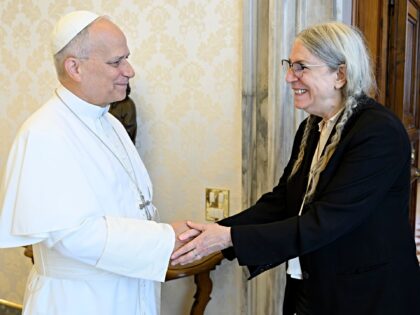
Patti Smith’s wide-eyed encounter with Pope Leo XIV is more than a celebrity photo-op; it’s a snapshot of how cultural icons still look to ancient institutions for validation, even as those same institutions quietly shape the moral language around self-defense. The punk-poet who once howled “Jesus died for somebody’s sins, but not mine” now finds herself momentarily star-struck by a Chicago-born pontiff whose own city wrestles daily with the fallout of gun-control experiments. In that brief meeting, two Chicago legends—one wielding a microphone, the other a crosier—illustrate the enduring tension between personal conviction and institutional authority, a tension the 2A community knows well when city hall or the cathedral claims the right to decide whose rights are sacred.
What makes the moment politically interesting is the subtext Smith never voiced: the same progressive circles that canonize her lyrics often treat the Second Amendment as a secular heresy. Yet the Pope she met hails from a town where lawful carry permit holders are routinely painted as the problem rather than the solution. If Leo XIV’s Chicago roots have taught him anything about the gap between policy and reality, his audience with Smith may quietly underscore how cultural influencers can either echo or challenge the narrative that only the state should be armed. For 2A advocates, the takeaway is simple—when even counter-culture royalty pauses before institutional power, it’s a reminder that rights are never secured by cool alone; they’re secured by citizens willing to defend them when the cameras, and the clerics, have left the room.


