

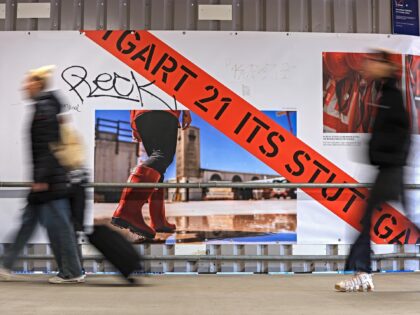
Germany’s latest rail fiasco—1,000 kilometers of cable laid in the wrong places—offers a textbook case of what happens when a government monopoly tries to build anything more complicated than a parking lot. Decades behind schedule and billions over budget, Stuttgart 21 has become a running joke in European infrastructure circles, yet the same political class that can’t keep track of its own wiring still insists it should be the sole arbiter of who may own and carry a firearm. The irony is almost too perfect: the same bureaucratic reflexes that produce misplaced cabling also produce “may-issue” permitting schemes, endless paperwork, and arbitrary disqualifiers that treat law-abiding citizens like potential saboteurs of public order.
For the 2A community the lesson is straightforward. Every time a state demonstrates it cannot competently manage its own projects, it simultaneously undercuts the argument that only the state can be trusted with defensive tools. If planners can misroute a thousand kilometers of signal cable on a prestige rail line, what confidence should we place in their ability to run instant background checks, maintain accurate prohibited-person databases, or fairly adjudicate carry-permit applications? The German experience suggests the answer is “very little,” which is why American gun owners continue to push for constitutional carry and shall-issue reforms rather than handing still more discretionary power to agencies already struggling with basic competence.
The broader implication is cultural as well as practical. A society that tolerates chronic waste and delay in its largest public works inevitably breeds cynicism about every other government function, including the regulation of arms. When voters see €10 billion rail projects implode over misplaced wire, they become far less receptive to lectures about why ordinary citizens cannot be trusted with the means of self-defense. In that sense, Stuttgart 21’s cable debacle is not just an infrastructure story; it is fresh evidence that the case for the Second Amendment rests partly on the observable limits of state capacity itself.


