

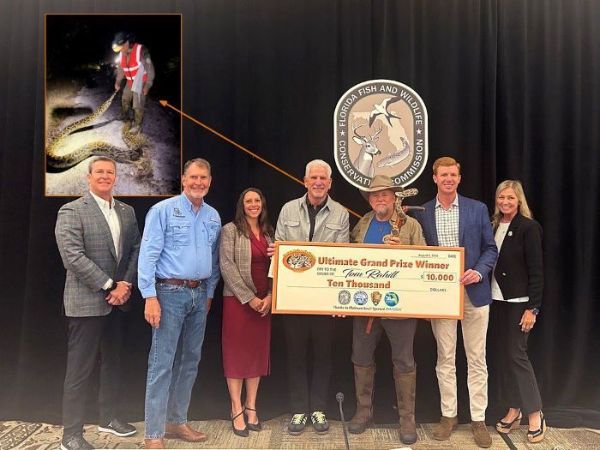
The 2026 Florida Python Challenge just proved what many of us have known for years: when private citizens are given the tools, training, and legal authority to act, they can solve problems that government agencies alone have struggled with for decades. Tom Rahill’s 96-python haul and Rahm Levinson’s 16-foot, 5-inch monster weren’t the result of another federal grant or bureaucratic task force—they were the product of motivated individuals exercising their Second Amendment rights in service of a real ecological crisis. The fact that 907 participants from three countries showed up with rifles, pistols, and the willingness to put in the work should be a case study in how constitutional carry and pro-active conservation can coexist.
What makes this story especially satisfying for the 2A community is how cleanly it undercuts the tired narrative that civilian firearms are only good for sport or self-defense. These hunters weren’t just “recreating”—they were conducting a precision culling operation that state biologists openly admit they can’t match in scale or cost-effectiveness. Every python removed is one less predator eating native mammals and birds, and every participant who showed up with a legally owned firearm demonstrated that an armed citizenry can be an environmental asset rather than a liability. The multi-state, even international turnout also quietly illustrates how permissive carry laws and clear self-defense statutes encourage people to travel with the tools they need, rather than leaving them at home out of fear of arbitrary enforcement.
The larger implication is that Florida’s approach—openly inviting civilians to hunt an invasive species with the same firearms they already own—should be studied by other states facing their own ecological or public-safety threats. Instead of more regulations that treat gun owners as the problem, policymakers could copy this model: identify a genuine threat, remove legal obstacles, and let responsible citizens bring their skills and equipment to bear. The results speak for themselves: nearly three hundred fewer pythons, zero taxpayer-funded SWAT teams, and a growing network of trained hunters who now have practical field experience they can apply to everything from hog control to disaster response. That’s not just good conservation; it’s a quiet but powerful argument for keeping the Second Amendment strong and unencumbered.


