

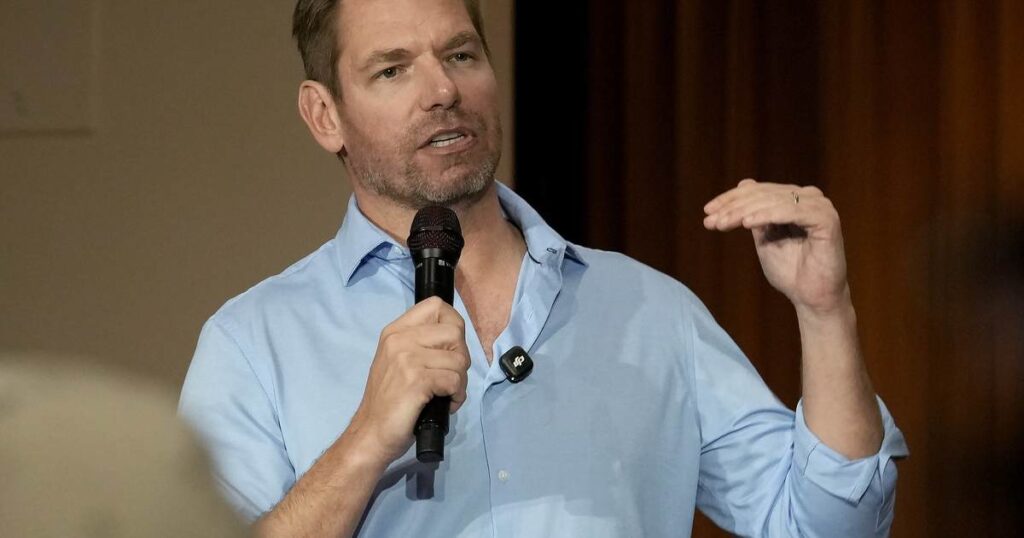
Eric Swalwell’s weekend encounter with the FBI at San Francisco International Airport is more than a tabloid splash—it’s a reminder that the same federal apparatus now turning its gaze on a sitting congressman has spent the last decade treating law-abiding gun owners as presumptive threats. While the bureau’s interest reportedly centers on allegations of sexual misconduct, the optics are unmistakable: agents in windbreakers, a high-profile Democrat, and a hastily arranged airport interview. For Second Amendment advocates, the scene evokes the same institutional muscle that has been flexed against FFLs, gun-show attendees, and even parents at school boards. When the investigative state can pivot so quickly from “assault-weapon owners” to one of its own, it underscores how fragile due-process protections truly are once the administrative state decides you’re a person of interest.
The deeper irony is that Swalwell has long positioned himself as a champion of “common-sense” restrictions that would expand the very databases and background-check regimes the FBI now appears to be leveraging against him. If the bureau’s preliminary inquiry can metastasize into a full investigation on the strength of unverified accusations, imagine the latitude it would enjoy under universal background checks, red-flag laws, or an “enhanced” NICS that funnels even more names into the system. The episode also spotlights the revolving door between congressional offices and federal law enforcement: Swalwell’s prior membership on the House Intelligence Committee gave him routine access to classified briefings, yet the same security apparatus that vetted him for those briefings is now questioning him in public. That tension should alarm anyone who believes the right to keep and bear arms ultimately rests on the ability to keep government power fragmented and accountable.
For the 2A community, the takeaway is straightforward: every expansion of federal authority—whether marketed as gun control or national-security reform—hands the same agencies more leverage over citizens and lawmakers alike. Swalwell’s airport moment is a cautionary snapshot of what happens when the investigative state operates with minimal political friction. If the rules can be bent for a sitting member of Congress, they can certainly be weaponized against the rest of us.


