

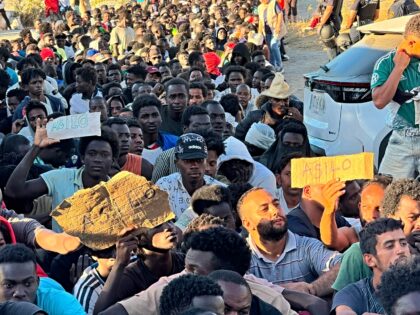
Ceuta’s religious leaders are not staging a protest against migrants themselves, but against the predictable chaos that follows when a porous border meets a sudden surge of young men from incompatible cultures. The Spanish enclave’s multi-faith coalition—Catholics, Muslims, and Jews—has watched the same script play out before: nightly rushes at the fence, overwhelmed police, and a spike in street crime that hits the poorest neighborhoods hardest. Their call for “measures” is a polite way of saying that Spain’s open-door posture has turned a small city into a live-fire range for social experiments that never seem to include the experimenters.
For the 2A community, the lesson is immediate and practical. When governments cannot—or will not—secure a border, the burden of self-defense shifts to the individual. Ceuta’s residents are discovering what many Americans already know: the police are minutes away when seconds count, and the first line of defense is often a lawfully armed citizen. The same demographic pressures that are overwhelming Spanish law enforcement are already visible in U.S. sanctuary cities, where illegal entrants are released into the interior with little vetting and even less accountability. The right to keep and bear arms is not a theoretical debating point; it is the only reliable backstop when political elites treat national sovereignty as optional.
The deeper implication is cultural. A population that cannot defend its own borders eventually loses the moral authority to defend any boundary—physical or constitutional. If Spanish citizens are told they must simply absorb the consequences of unchecked migration, it is only a matter of time before American gun owners hear the same lecture about “common-sense” restrictions on the Second Amendment. The Ceuta rally is therefore more than a local story; it is an early warning that sovereignty and self-defense travel together, and that neither survives long once the political class decides both are negotiable.


