

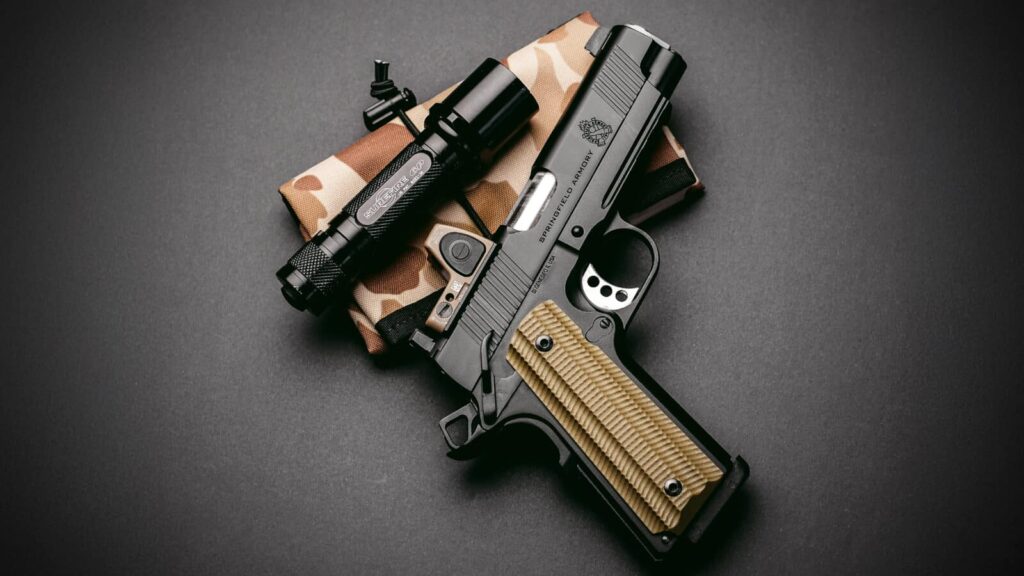
In a world where defensive encounters rarely happen under the bright lights of high noon, the ability to properly deploy a handheld light might be one of the most overlooked yet critical skills in the armed citizen’s toolbox. Mike Boyle’s recent piece serves as a timely reminder that while many of us obsess over red dots, suppressors, and the latest pistol upgrades, the humble flashlight often gets treated as an afterthought—until that split second arrives when you need to simultaneously identify a threat, manage a potential low-light malfunction, and maintain situational awareness without compromising your draw stroke.
The reality is that low-light conditions dramatically shift the dynamics of any self-defense scenario. Statistics consistently show a disproportionate number of violent encounters occur during darkness or in poorly lit environments, turning what should be a simple “see, assess, respond” sequence into a complex dance of managing white light, muzzle direction, and decision-making under stress. Boyle rightly highlights that effective flashlight techniques—whether using the FBI method, the Harries technique, or modern weapon-mounted solutions—aren’t just tactical parlor tricks. They represent fundamental fighting skills that can mean the difference between mistakenly identifying a non-threat and stopping a legitimate deadly force encounter. For the 2A community, this isn’t about collecting more gear; it’s about developing genuine competency with the tools we already carry.
The deeper implication here should hit every responsible gun owner hard: our training priorities need constant recalibration. It’s easy to get caught up in square range drills under perfect lighting, but true preparedness demands we invest equal effort in the conditions where we’re statistically most likely to need our skills. The flashlight remains one of the few tools that serves both as a less-lethal option for signaling, searching, and de-escalation while simultaneously enhancing our ability to employ deadly force responsibly when justified. As Boyle suggests, mastering light discipline isn’t optional for serious students of self-defense—it’s foundational. The question isn’t whether you own a quality light. The question is whether you can actually fight with it when the lights go out.


