

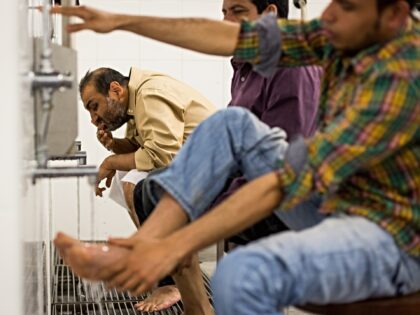
Dallas Fort Worth’s decision to carve out taxpayer-adjacent real estate for ritual foot-washing basins is less about hygiene and more about carving permanent exceptions into public space for one faith at the expense of everyone else’s expectations of neutrality. When a major U.S. airport quietly green-lights infrastructure that exists solely to accommodate Islamic ablution rites, it signals that religious accommodation has graduated from passive tolerance to active architectural favoritism—an unmistakable precedent that other groups will inevitably test.
For the 2A community the lesson is straightforward: if local governments can normalize the insertion of sectarian fixtures into shared civic venues, they can just as easily normalize the removal of gun-friendly fixtures under the same “reasonable accommodation” rationale. Airports already function as Constitution-free zones where the right to bear arms is suspended by federal fiat; once the principle is accepted that one religion’s ritual requirements trump uniform rules, future “security reviews” could just as plausibly target ranges, gun shops, or even the simple act of carrying in the name of cultural sensitivity. The foot-washing basin is therefore not an isolated cultural amenity—it is an early warning that the same administrative machinery used to privilege one group’s practices can later be repurposed to disadvantage another’s enumerated rights.


