

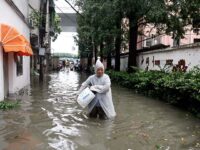
China’s decision to throttle “flood-related rumors” while Typhoon Dolphin churns inland is a textbook reminder that information control is the first line of defense for any authoritarian regime. By labeling citizen reports of submerged villages and overwhelmed dams as dangerous misinformation, Beijing is not merely managing panic—it is preserving the illusion that the state alone can guarantee safety. For Americans who value the Second Amendment, the lesson is stark: when a government monopolizes both the narrative and the means of self-defense, ordinary people are left defenseless twice over—once against the storm and again against the silence that follows.
The contrast with the United States could not be sharper. Here, private firearm ownership and a constitutionally protected press create overlapping layers of resilience. When hurricanes or wildfires strike, armed citizens often form the first ad-hoc security for neighborhoods while independent journalists and social-media users document damage in real time. That dual redundancy—armed self-reliance paired with uncensored information—makes large-scale cover-ups far more difficult. China’s censors, by contrast, can delete videos of flooded streets the same way they once erased images of tanks in Tiananmen Square, leaving citizens without the situational awareness that might have prompted them to evacuate or, if necessary, defend their homes.
Ultimately, the typhoon story is less about weather than about power. A regime that fears “rumors” more than rising water will never trust its people with the tools of resistance—whether those tools are smartphones or semiautomatic rifles. The 2A community should watch these episodes closely: they illustrate why the right to keep and bear arms is inseparable from the right to speak freely. Both are safeguards against a state that would rather manage perception than confront reality.


