

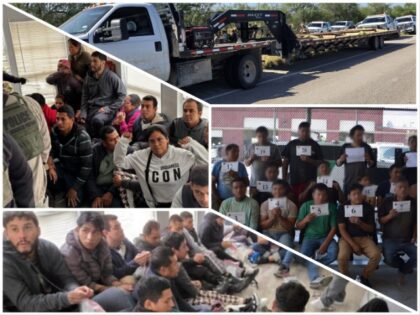
Border Patrol agents in Texas just pulled back the curtain on another ugly chapter in the border crisis, uncovering two human-smuggling rings that relied on squalid stash houses and jury-rigged vehicles to ferry illegal aliens deeper into the country. The “filthy” conditions weren’t just a matter of hygiene—they’re a symptom of an industry that treats human cargo as disposable, cramming migrants into overcrowded safe houses and then loading them into vehicles that have been dangerously altered to evade detection. These modifications—hidden compartments, reinforced suspension, even makeshift armor plating—aren’t just smuggling tricks; they’re rolling proof that criminal organizations view the border as a low-risk, high-reward corridor where the rule of law is optional.
For the 2A community, the takeaway is straightforward: when the federal government cannot—or will not—secure the border, the vacuum is filled by armed cartels that treat firearms as another line item on the manifest. The same networks moving people are moving guns, and the same vehicles that can be rigged to hide migrants can just as easily hide rifles, handguns, or the parts needed to assemble ghost guns. Every stash house that doubles as an armory, every “dangerously modified” van that doubles as a rolling gun locker, underscores why law-abiding citizens on both sides of the border need the ability to keep and bear arms without waiting for a slow-moving federal response that may never arrive.
The larger implication is that border security and the Second Amendment are two sides of the same coin. When enforcement is porous, the cartels’ business model expands; when the cartels expand, the threat matrix for American communities grows. The Texas busts are a reminder that the right to self-defense isn’t an abstract principle—it’s a practical necessity in a world where the people profiting from open borders are also the ones most likely to be armed to the teeth.


