

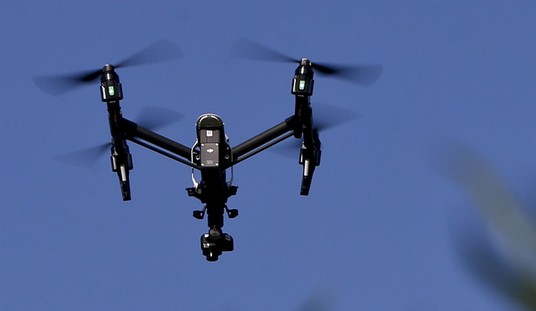
Broward County’s decision to send drones after active shooters is a textbook example of government finally admitting that the cavalry doesn’t arrive in time. Instead of hardening every classroom door or letting trained staff carry, the district is betting on remote-controlled eyes in the sky to spot, track, and—presumably—summon the same slow-moving police response that failed Marjory Stoneman Douglas. The optics are clever: drones sound high-tech and non-lethal, so administrators dodge the political third rail of arming teachers while still claiming they’re “doing something.” Yet the underlying math hasn’t changed—seconds still matter more than pixels, and a quadcopter hovering outside a locked door can’t stop a determined attacker already inside.
For the 2A community, the move is equal parts validation and warning. It tacitly concedes that law-enforcement-first models are inadequate, which is precisely the argument gun owners have made for decades. At the same time, it underscores how institutions would rather spend six figures on gadgets than trust ordinary citizens with the most effective tool for stopping violence: an armed, prepared defender on the scene. If Broward’s drones ever do shorten response times, expect the same footage to be trotted out as proof that “we don’t need more guns.” If they don’t—and history suggests they won’t—the district will quietly memory-hole the program while continuing to block any policy that empowers the people actually inside the building.
The deeper implication is philosophical. Once schools accept that an active killer can only be stopped by force, the debate shifts from “whether” to “who.” Drones keep that authority firmly in the hands of off-site officials and SWAT teams. Constitutional carry, school-marshall programs, and trained staff flip the script, putting decisive force in the same zip code as the threat. Broward’s experiment will be worth watching—not because the drones themselves matter, but because the inevitable after-action report will once again reveal whether technology can outrun the timeless truth that an armed citizen on the spot beats any gadget launched five minutes too late.


