

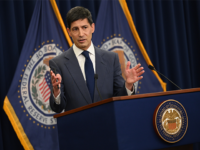
Kevin Warsh’s blunt assessment that the Federal Reserve has run out of credible tools—and that its endless “story hour” of forward guidance and rate tweaks has lost the public’s trust—lands like a warning shot across the entire economy. When the former Fed governor argues that monetary policy has become theater rather than substance, he is describing an institution whose balance-sheet experiments and political signaling have steadily eroded the purchasing power of the dollar. For Second Amendment supporters that matters because every round of money creation that outpaces real economic growth quietly transfers wealth from savers and wage earners to asset owners and government insiders; the same dynamic that makes ammunition, optics, and training more expensive also makes it harder for ordinary citizens to maintain the financial independence that underpins the right to keep and bear arms.
The deeper implication is institutional. If the Fed’s credibility is exhausted, Congress and the executive branch will face mounting pressure to monetize deficits directly or to impose capital controls and digital-currency schemes in the name of “stability.” Both paths concentrate power in fewer hands and create new choke points—banking rules, transaction surveillance, and politically directed credit—that can be turned against firearm manufacturers, FFLs, and individual owners. Warsh’s diagnosis therefore isn’t just about interest rates; it is a reminder that sound money and the ability to defend one’s rights are linked, and that any further degradation of the former invites fresh attacks on the latter.


