

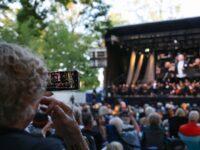
The boos that erupted at Bayreuth this summer weren’t aimed at a conductor or a diva—they were aimed at an algorithm. When the curtain rose on a new production of *Tannhäuser* whose sets and lighting cues had been generated by an AI model trained on every Wagner staging since 1876, traditionalists in the audience saw not innovation but erasure: the human hand that once wrestled with myth and timber had been replaced by a prompt box. What looked like a triumph of efficiency to the festival’s board felt, to many patrons, like the final act in a long retreat from live, unpredictable craftsmanship—the same retreat that gun-control advocates promise will make society “safer” once human discretion is taken out of the use-of-force equation.
That tension travels straight to the gun counter. Just as stage direction once required a living regisseur who could read an auditorium’s mood in real time, self-defense still hinges on split-second judgment that no dataset can fully encode. When legislators float “smart guns” that will only fire after an app approves the target, or “violence interrupter” algorithms that pre-dict who may own a firearm, they are selling the same bill of goods the Wagnerians just rejected: the notion that silicon can stand in for conscience and context. The crowd’s reaction in Germany reminds us that once you outsource the final creative—or protective—decision, you also surrender the ability to course-correct when the model is wrong.
For the 2A community the lesson is straightforward. Every new restriction marketed as “modernization” should be inspected for the same hidden stage direction now drawing catcalls in Bavaria: the quiet removal of human agency. Whether the tool is a neural-net libretto or a geofenced trigger, the principle remains: rights exist in the gap between prediction and action, and that gap must stay wide enough for a free person to step through.


