

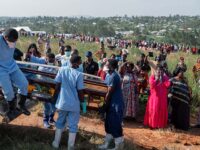
The Ebola flare-up in Congo isn’t just another distant health headline; it’s a textbook reminder that when governments lose control of basic security, the first thing that collapses is the rule of law that keeps civilians safe. Africa CDC’s warning that this could eclipse past outbreaks should force every Second Amendment supporter to ask the obvious follow-up: if the same level of institutional failure hit a Western nation, would you rather be the citizen waiting for a slow-moving aid convoy or the one who already has the means to protect your family? History shows that disease-driven chaos rarely stays neatly inside national borders; supply chains fracture, travel corridors close, and opportunistic crime spikes long before any official “state of emergency” is declared.
For the firearms community the takeaway is practical rather than theoretical. Stock rotation, medical preps, and redundant communications matter, but none of them replace the ability to deter or stop immediate threats when police are either overwhelmed or ordered to stand down. The same legal architecture that lets law-abiding citizens keep and bear arms also lets them maintain the training, ammunition reserves, and defensive tools that turn panic into calculated response. Congo’s tragedy underscores why those rights cannot be treated as optional hobbies; they are the last line when every other system is strained past its breaking point.
Policy-wise, the outbreak should stiffen resistance to any fresh attempt to limit magazine capacity, impose new “high-risk” disease registries, or treat firearms as vectors for social instability. Public-health scares have repeatedly been used as pretexts for rushed restrictions that never sunset once the crisis passes. The 2A community’s job is to keep the conversation anchored in individual responsibility and constitutional principle, not to let temporary fear become permanent disarmament.


