

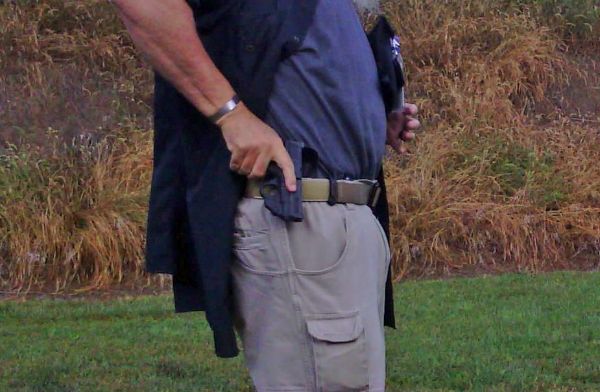
The ability to reholster a firearm without drama isn’t just a convenience—it’s a quiet referendum on how far the culture has drifted from the idea that armed citizens are responsible adults rather than presumptive threats. When a simple, mechanical act like returning a sidearm to its holster becomes the subject of policy debate, training mandates, or even legislation, it reveals how thoroughly the presumption of competence has been stripped from lawful gun owners. The fact that this capability is once again being treated as noteworthy tells us the Overton window on everyday carry has shifted so far that basic functionality now registers as a “win.”
For the broader Second Amendment community, the re-emergence of this discussion is both a warning and an opportunity. It underscores how incremental restrictions—on hardware, on training doctrine, on the very language used to describe routine tasks—can accumulate into a functional disarmament long before any outright ban is proposed. At the same time, it hands advocates a crisp, relatable example: if the state feels entitled to second-guess whether you can safely reholster your own pistol, there is effectively no limit to the micro-management it believes it can impose. Framing the issue this way turns an ostensibly minor hardware or policy footnote into a teachable moment about first principles.
Ultimately, the right to keep and bear arms includes the right to manage those arms competently and without a permission slip for each mechanical step. When that right is treated as novel or provisional, the burden of proof should fall on the regulators, not on the citizen who simply wants to finish the draw cycle the same way countless law-abiding carriers do every day.


