

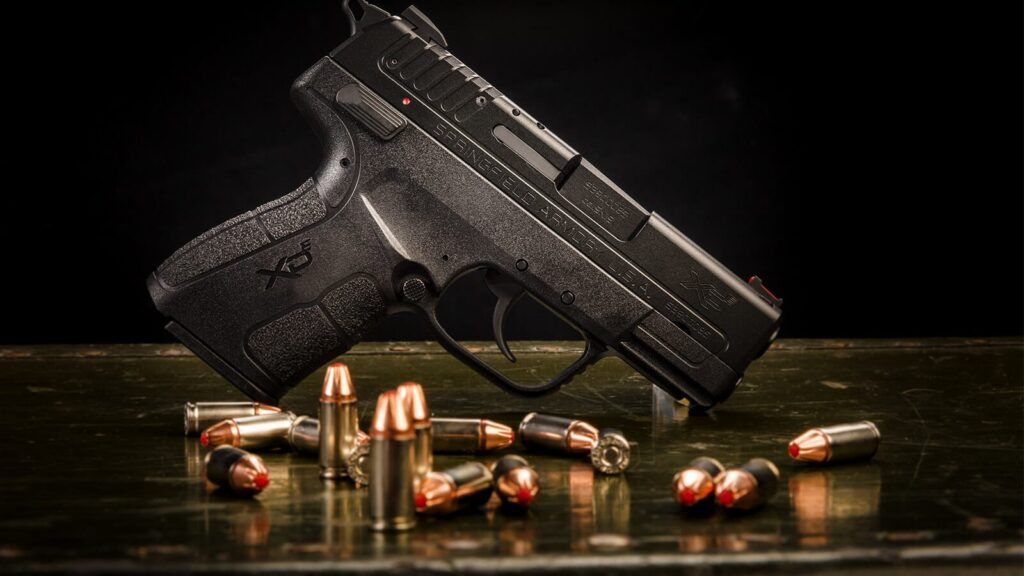
The eternal 9mm versus .45 ACP debate isn’t just about ballistics tables—it’s a living referendum on how the Second Amendment community chooses to balance capacity, shootability, and stopping power in an era when defensive firearms are carried daily by millions. Springfield’s timing with this piece lands right as polymer-framed 9mm pistols have achieved near-universal adoption among new carriers, yet a stubborn and vocal minority still swears by the big-bore .45’s slower, heavier projectile and the psychological reassurance it brings. What the article quietly underscores is that modern defensive ammo has largely erased the old “one-shot stop” mythology; both calibers, when fed quality hollow points, deliver FBI-protocol performance, shifting the real decision to how many rounds you can comfortably carry and how quickly you can deliver them under stress.
For the broader 2A ecosystem the implications are practical rather than philosophical: states pushing magazine-capacity restrictions inadvertently hand an edge to .45 ACP fans whose standard 1911-pattern guns already ship with single-stack or 10-round double-stack options, while 9mm carriers lose the 15- to 17-round advantage that has become the de-facto standard in constitutional-carry jurisdictions. Meanwhile, the training community has quietly migrated toward 9mm because cheaper, softer-shooting practice ammo lets new shooters log the thousands of rounds necessary to build real skill—an advantage that ultimately strengthens the armed citizenry more than any single caliber choice. In short, the “conundrum” is less about which bullet is better and more about how legal regimes, economics, and training culture steer millions of individual decisions that collectively reinforce the right to keep and bear arms.


