

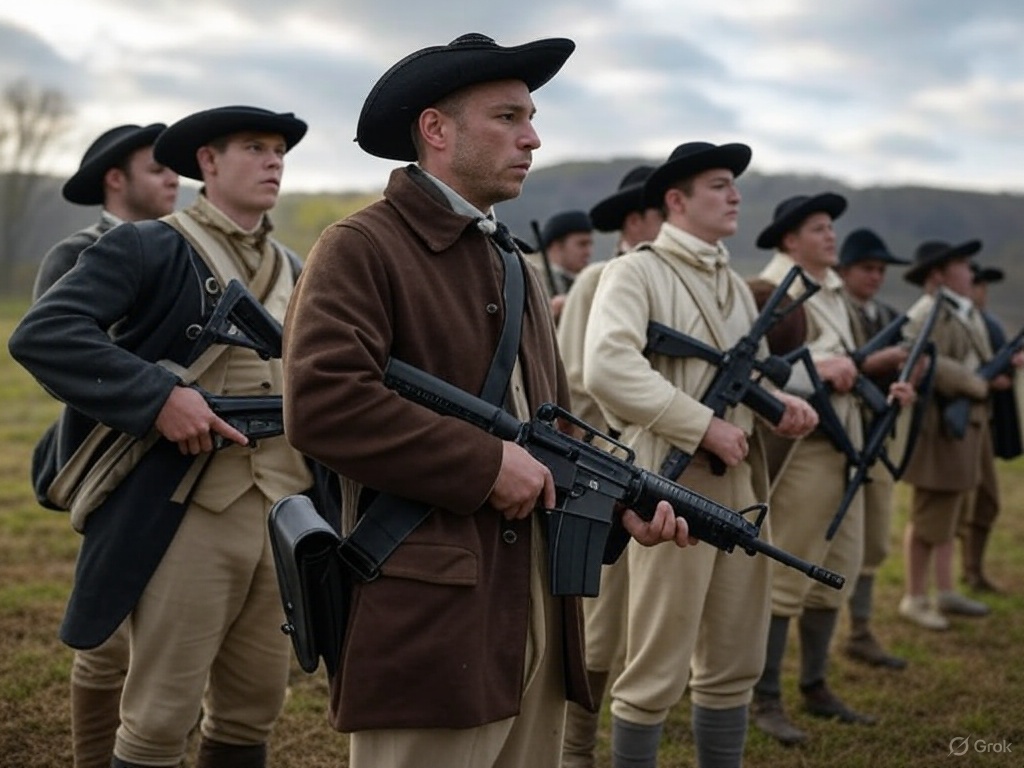
Two hundred and fifty years after the first shots at Lexington and Concord, the same principle that armed the Minutemen still underpins American liberty: an armed citizenry remains the ultimate check against tyranny. The firearms industry has never been a passive supplier; it has been the industrial backbone that turned colonial blacksmiths into the Springfield Armory, then into today’s precision manufacturers whose CNC-milled receivers and polymer frames equip both the military and millions of private citizens. Every time a new restriction is floated in Congress, the industry’s response—expanded capacity, rapid innovation, and record civilian sales—demonstrates that demand for self-reliance rises in direct proportion to political pressure, turning regulatory threats into market tailwinds that keep factories humming from Maine to Arizona.
That continuity carries concrete implications for today’s Second Amendment community. When politicians speak of “assault weapons” or magazine limits, they are not merely targeting hardware; they are attempting to sever the living link between 1776 and 2026. Yet the data show the opposite outcome: states that pass the strictest controls see the fastest growth in neighboring shall-issue or constitutional-carry jurisdictions, and manufacturers respond by accelerating modular, feature-rich platforms that skirt arbitrary definitions while preserving defensive utility. The result is a decentralized ecosystem of small-batch producers, 80-percent builders, and cottage gunsmiths that makes any single point of regulatory failure irrelevant—an industrial-scale illustration of federalism at work.
For gun owners, the lesson is both historical and forward-looking: the same tools that secured independence continue to secure neighborhoods, businesses, and families when seconds count and police response times stretch into minutes. Supporting domestic manufacturers, training with the platforms they produce, and voting for candidates who treat the right to keep and bear arms as non-negotiable are not nostalgic gestures; they are the practical continuation of the 250-year bargain that has kept the republic intact. As the next quarter-millennium begins, America’s gun makers remain what they have always been—guardians of the means by which free people stay free.


