

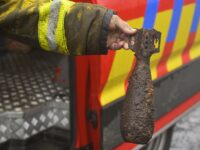
Wildfires sweeping across Europe’s old battlefields are doing more than scorching timber—they’re unearthing and cooking off the unexploded ordnance that has lain dormant since the Great War and the Second World War. In France’s Verdun forest and Germany’s Black Forest, flames have triggered everything from 75 mm shrapnel shells to 500-pound aerial bombs, sending geysers of earth skyward and forcing evacuations miles away. What looks like a purely environmental story is, in fact, a live-fire demonstration of how fragile the line is between “harmless relic” and “active munition,” a lesson the firearms community has been preaching for generations: inert is not the same as safe, and history’s leftovers still bite.
For Second Amendment advocates, the parallel is obvious. Just as governments once assured civilians that surplus artillery rounds posed “no risk” if left buried, today’s regulators insist that certain modern arms and ammunition are harmless until political fashion declares otherwise. The same bureaucracies that struggle to map and defuse century-old bombs now claim they can track, license, and eventually confiscate privately owned firearms without creating black markets or endangering the law-abiding. Watching French bomb-disposal teams race against wind-driven flames is a reminder that once an object capable of energetic release exists, it cannot simply be wished out of existence; it must be managed with competence and respect—two qualities governments rarely demonstrate when the objects in question are in civilian hands.
The deeper implication is cultural. Europe’s “post-conflict” landscape still detonates because the debris of war was never fully reconciled with the land or the people who live on it. In the United States, our constitutional order was designed precisely to prevent that kind of unfinished business: an armed citizenry keeps the tools of security distributed, visible, and under the direct control of those whose lives depend on them. When the next wildfire season rolls around, Europe will again be outsourcing its safety to specialized teams racing against nature. Americans, by contrast, retain the ability—and the legal right—to manage their own risk, maintain their own readiness, and ensure that the only explosions on their soil are the ones they themselves authorize.


