

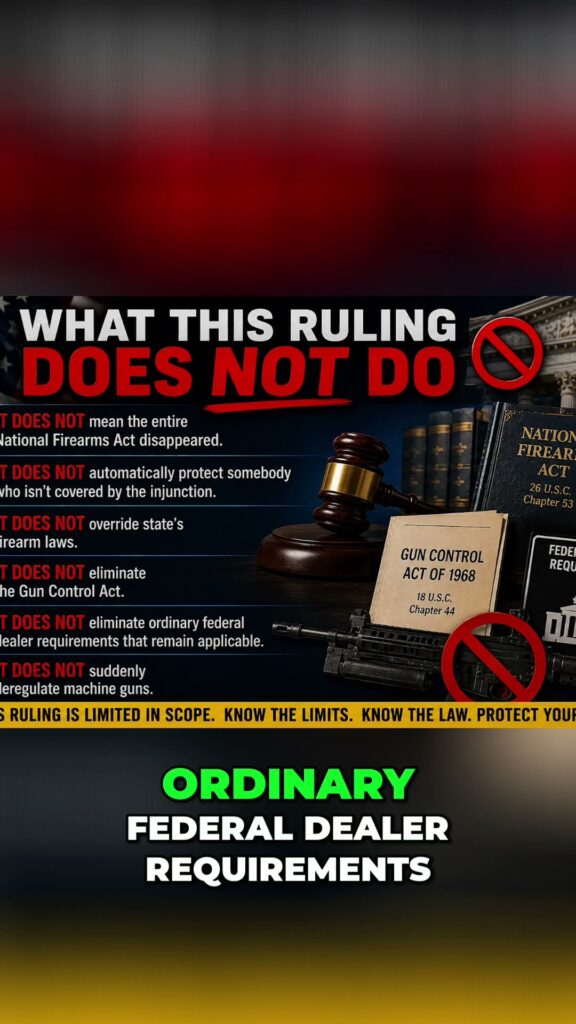
The NFA injunction that’s making the rounds right now is being celebrated as a “win,” but the fine print tells a more nuanced story. The order only pauses the ATF’s new “pistol brace” rule for the specific plaintiffs who sued; it does not vacate the regulation nationwide, nor does it touch the underlying National Firearms Act framework that classifies short-barreled rifles and shotguns as Title II items. In practical terms, the millions of braced pistols already in civilian hands remain in a gray zone unless their owners were party to the litigation, and the government can still prosecute anyone who isn’t explicitly covered by the injunction. That narrow scope is why the celebratory headlines risk giving gun owners a false sense of security.
What the ruling does accomplish, however, is keep the legal pressure on the ATF’s administrative overreach and buy time for parallel challenges working their way through other circuits. By spotlighting how the agency tried to rewrite statutory definitions without congressional approval, the case reinforces a growing judicial skepticism toward agency-made gun law—an argument that resonates far beyond braces. For the broader Second Amendment community, the lesson is strategic: incremental litigation can stall enforcement, but durable change still requires either a Supreme Court willing to revisit the NFA’s constitutionality or legislation that reins in the ATF’s rulemaking power. Until then, the safest course is to treat the injunction as a temporary shield, not a permanent sword.


