

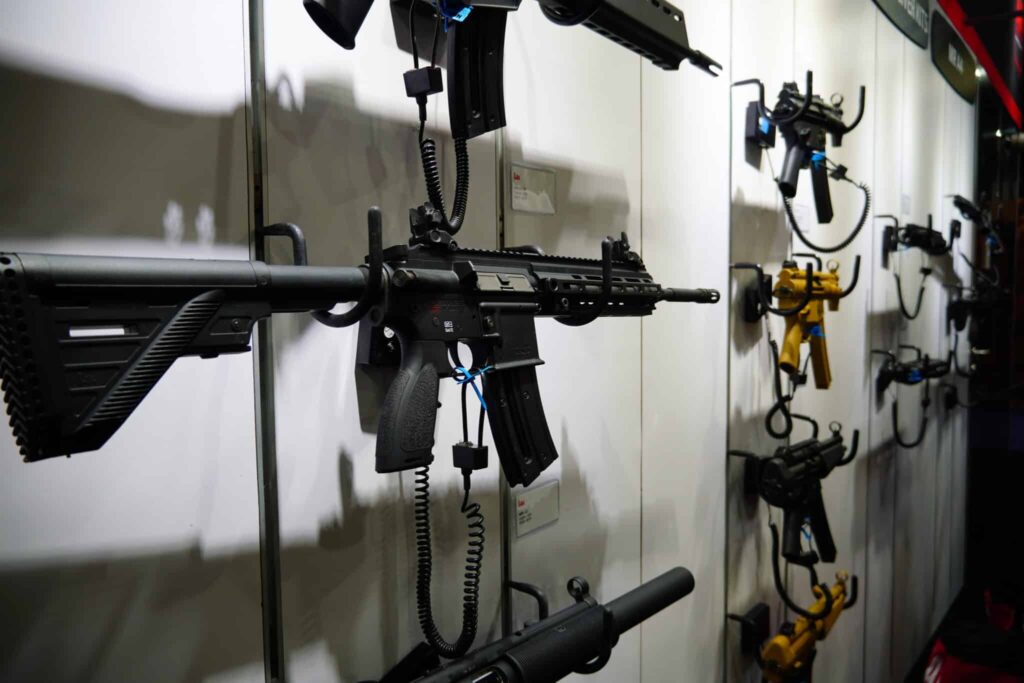
The Supreme Court’s decision to hear these assault-weapons challenges is less about the fate of any single rifle and more about whether the Court will finally force lower courts to treat the AR-15 like the constitutionally protected “Arms” it plainly is. For years, judges have hidden behind interest-balancing tests and “sensitive places” rhetoric to uphold bans that would have been unthinkable for magazine-fed, semi-automatic firearms in common use; now the justices must decide whether the Bruen history-and-tradition test actually means what it says or whether it can be gamed by re-labeling popular guns as “unusual.” The oral arguments will therefore be a referendum on whether the Second Amendment remains a real individual right or merely a parchment barrier that can be overridden whenever a legislature waves the word “assault.”
What the 2A community should listen for is not just the usual hypotheticals about machine guns, but whether any justice is willing to adopt the government’s invitation to treat the AR-15’s ergonomics, accessory rails, or even its cosmetic features as constitutionally dispositive. If the Court signals that a rifle’s rate of fire, detachable magazine, or military-adjacent appearance can strip it of protection, the practical effect will be to green-light feature-based bans nationwide and to invite endless legislative re-drafting that keeps the same guns just out of reach. Conversely, a clear statement that commonality of lawful use—not a gun’s aesthetics or its superficial resemblance to a military rifle—controls the analysis would slam the door on the current wave of state-level prohibitions and force lower courts to confront the empirical reality that millions of AR-15s are owned by ordinary citizens for lawful purposes.
The stakes extend well beyond the two statutes before the Court. A ruling that treats the AR-15 as outside the Amendment’s reach would hand anti-gun lawmakers a roadmap for nationwide restrictions on the single most popular centerfire rifle in America, effectively nullifying Heller’s “common use” test without ever overruling it. A robust affirmation of that test, however, would not only protect today’s rifles but also inoculate tomorrow’s innovations—pistol braces, braced pistols, and whatever modular platforms emerge next—against the same cycle of panic legislation. In short, the arguments will reveal whether the Court still believes the Second Amendment protects the people’s choice of arms or merely tolerates it until the next election cycle.


