

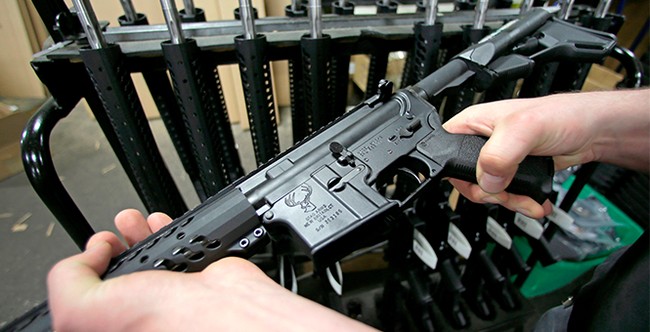
The anti-gun narrative has long relied on a parade of boogeymen—ghost guns, assault weapons, and the ever-present claim that more firearms equal more danger—to push restrictions that ultimately disarm law-abiding citizens while leaving criminals untouched. Yet the data consistently shows that the overwhelming majority of gun owners are responsible, that so-called “ghost guns” represent a statistically tiny fraction of firearms used in crime, and that states with the strictest gun-control regimes often post the highest per-capita violent-crime rates. When you strip away the emotional rhetoric, what remains is a pattern: every new restriction is sold as a public-safety measure but functions instead as another barrier between citizens and their constitutional right to self-defense.
For the 2A community, these recurring scare campaigns are less about crime statistics and more about narrative control—convincing the public that ordinary gun owners are the problem so that incremental bans become politically palatable. The facts, however, keep exposing the disconnect: background-check compliance among retail purchasers exceeds 90 percent, the vast majority of “assault weapon” features are cosmetic, and defensive gun uses are estimated in the hundreds of thousands annually. Each time the anti-gun lobby inflates a marginal issue into a national crisis, it hands the firearms community another opportunity to demonstrate that the real threat to public safety is not the law-abiding gun owner but the policies that erode deterrence and shift the balance of power toward criminals.
The implication is clear: the 2A movement must continue to meet these claims with unapologetic transparency and data-driven rebuttals rather than defensive posturing. By highlighting how restrictions disproportionately affect the very people least likely to commit violence, advocates reinforce the principle that the right to keep and bear arms is not a privilege granted by government but a safeguard against it. In an era when trust in institutions is eroding, the cold, hard numbers remain the strongest argument that an armed citizenry is not something to fear—it is the foundation of a free society.


