

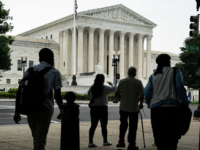
The Washington Post’s latest broadside against the Supreme Court’s reading of the 14th Amendment’s Citizenship Clause is more than academic hand-wringing—it’s a window into how the same interpretive gymnastics used to shrink the plain text of “subject to the jurisdiction thereof” could one day be turned on the Second Amendment’s “shall not be infringed.” When legacy outlets insist that birthright citizenship must be stretched to cover children of illegal entrants despite 150 years of contrary understanding, they reveal a willingness to treat constitutional text as infinitely malleable whenever the policy outcome is favored. That same elasticity has already been deployed against the right to keep and bear arms; every time a court “discovers” that “infringed” really means “lightly regulated if the legislature feels strongly enough,” the 2A community watches another precedent chipped away under the banner of evolving standards.
For gun owners the lesson is straightforward: textualism and originalism are not partisan slogans but the only reliable brake on administrative and judicial overreach. If the Citizenship Clause can be judicially rewritten to erase the jurisdictional limitation the Framers wrote in, then the phrase “the right of the people” in the Second Amendment is equally vulnerable to creative redefinition by future courts stocked with living-constitutionalists. The Post’s complaint therefore functions as an inadvertent warning shot—today it’s birthright citizenship, tomorrow it could be the individual-right holding of Heller or the sensitive-places analysis of Bruen. Pro-2A citizens who shrug at immigration rulings do so at their peril; the same institutional actors pushing to dilute one enumerated right have already signaled they view the other as equally negotiable.
The practical takeaway for the firearms community is to treat every textualist victory, whether on citizenship, the right to carry, or the definition of “arms,” as part of a single constitutional front. Supporting original-meaning jurisprudence across the board, funding litigation that forces courts to confront the text rather than policy preferences, and calling out media attempts to normalize results-oriented judging are no longer optional extras—they are force protection for the Second Amendment itself.


