

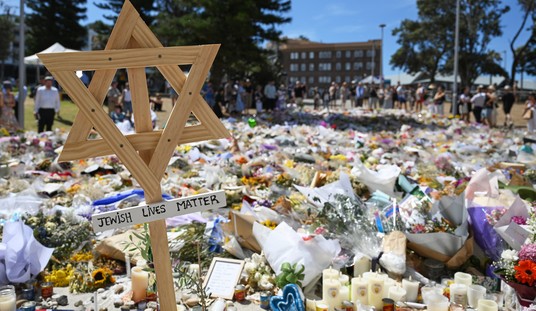
The Bondi Beach shooting isn’t a tidy morality play about antisemitism or the supposed evils of private gun ownership; it’s a textbook case of what happens when governments prioritize optics over the hard realities of human behavior and self-defense. Australia’s strict gun laws didn’t stop a determined attacker from finding a way to strike, just as they didn’t prevent the 2019 Christchurch or 2022 Wieambilla incidents. The real story is that law-abiding citizens were left disarmed and dependent on a response time measured in minutes while the threat arrived in seconds. For the 2A community, this is yet another data point showing that “common-sense” restrictions rarely disarm criminals—they simply create target-rich environments where only the prepared or the lucky survive.
What makes the incident especially instructive is how quickly the usual suspects tried to shoehorn it into their preferred narratives. Some rushed to blame antisemitism, others gun availability, but both camps conveniently ignored the fact that Australia’s near-total civilian disarmament has done nothing to erase violence rooted in ideology, mental illness, or simple evil. The 2A argument isn’t that guns magically solve every problem; it’s that removing them from responsible hands guarantees that only predators will be armed when seconds count. Every time a “gun-free” paradise experiences a mass attack, the data reinforces what American gun owners have said for decades: an armed citizenry is the last line of defense when government promises fail.
The broader implication for pro-2A advocates is that we must keep hammering home the difference between policy that sounds compassionate and policy that actually keeps people alive. Australia’s experiment has run long enough to show that confiscation and restriction correlate with neither the elimination of violence nor the protection of vulnerable communities. Instead, they correlate with increased reliance on police who cannot be everywhere at once. The lesson isn’t to gloat over tragedy; it’s to recognize that the right to keep and bear arms isn’t a cultural quirk—it’s a practical acknowledgment that evil doesn’t obey signage or statutes, and free people deserve the means to meet it when it arrives.


