

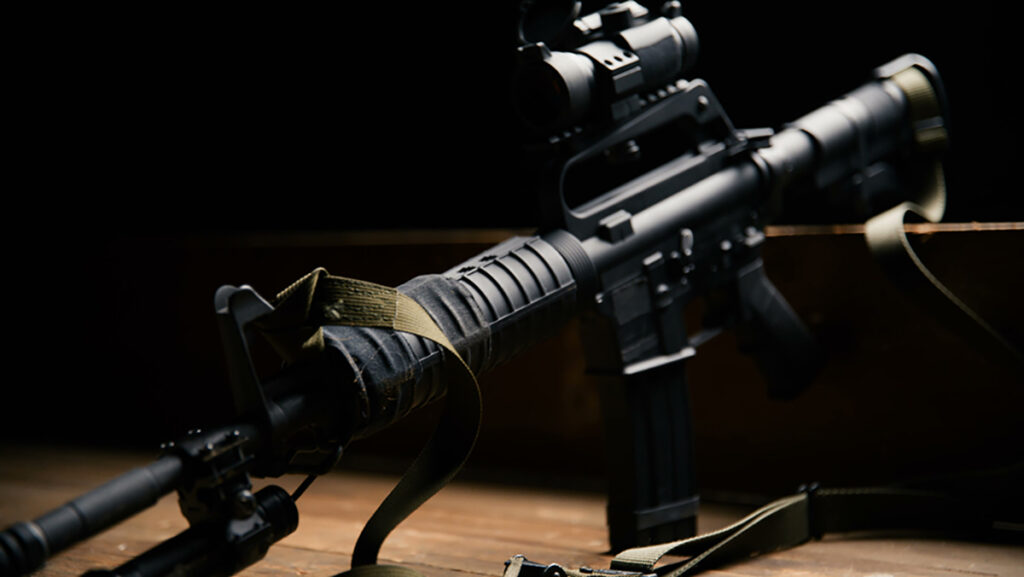
Virginia’s latest push to brand the AR-15 a “weapon of war” ignores the inconvenient fact that the rifle’s direct ancestors—the 1792 contract muskets and the 1819 Hall breechloader—were issued to citizen-soldiers precisely because they were the most advanced arms of their day. Far from being exotic military hardware, these firearms were the civilian standard; every able-bodied man was expected to own and maintain one equivalent to what the regular army carried. By that historical measure, today’s semi-automatic AR simply continues a two-century American tradition of putting state-of-the-art repeating arms into private hands, not removing them.
The political rhetoric also glosses over the legal lineage that runs from the 1791 Second Amendment through 2008’s Heller decision and 2022’s Bruen framework: both the Supreme Court and the historical record treat common-use arms as presumptively protected, and the AR-15 is now the single most popular centerfire rifle in the country. Labeling it a “weapon of war” is therefore less a factual description than an attempt to smuggle in a new, functional test that Heller already rejected—one that would let legislators redefine protected arms simply by calling them scary. If that linguistic trick succeeds in Virginia, it sets a precedent that could travel to other states eyeing magazine limits, “assault-weapon” bans, or registration schemes.
For the 2A community the takeaway is straightforward: victories at the Supreme Court mean little if local officials are allowed to rewrite history and manufacture new categories of “non-protected” guns. Grass-roots litigation, state-level preemption statutes, and relentless public education about the founding-era practice of an armed populace remain the practical tools for keeping the AR-15—and every other commonly owned modern arm—outside the reach of euphemistic bans dressed up as “public safety.”


