

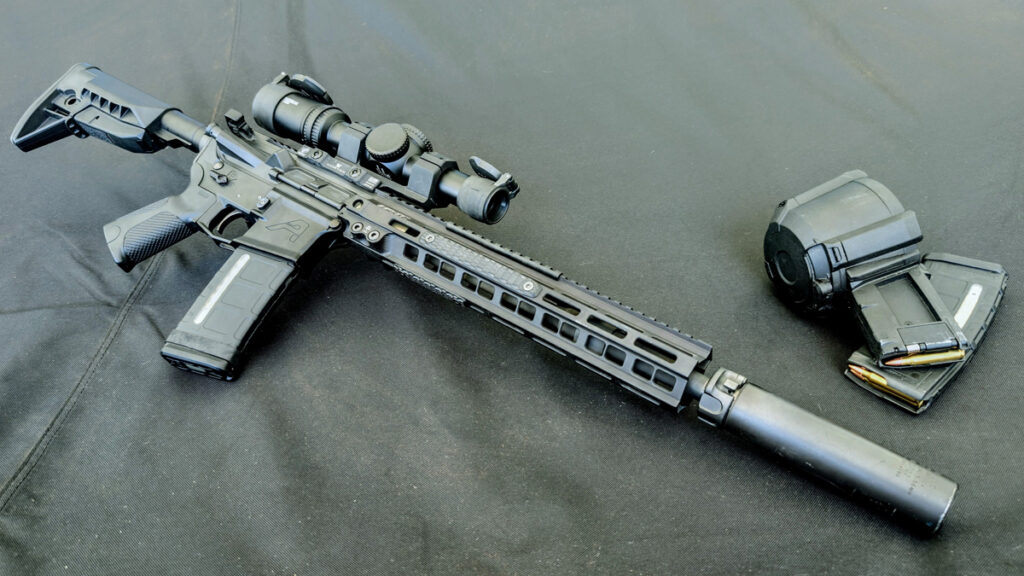
Viramontes v. County of Los Angeles is shaping up to be the kind of case that could finally crack the legal foundation under every assault-weapons ban still standing. The Ninth Circuit’s decision to rehear the matter en banc signals that the court is no longer comfortable pretending the AR-15 is some exotic outlier; instead, the panel is being forced to confront the fact that millions of law-abiding Americans already own and use these rifles for lawful purposes. That reality collides head-on with the post-Bruen requirement that any gun restriction must be consistent with the nation’s historical tradition, and the historical record simply does not contain a tradition of banning the most popular rifle in the country.
For the 2A community the stakes are both immediate and long-term. A favorable ruling would not only gut California’s ban but would hand lower courts a ready-made template for striking down similar restrictions in Illinois, New York, and anywhere else legislators have tried to criminalize the modern semiautomatic rifle. Even a narrow win would force anti-gun jurisdictions to defend their laws with actual historical analogues rather than policy preferences dressed up as “sensitive places” or “sensitive features.” The ripple effect could reach magazine-capacity limits, feature bans, and even the registration schemes that have long served as the quiet infrastructure of gun control.
Strategically, the case also underscores how critical it is for the community to keep feeding the courts with evidence of common use. Every new AR-15 sold, every competition shooter who posts a match video, and every hunter who harvests game with a modern sporting rifle adds another data point that courts can no longer ignore. Viramontes may be the first domino, but the momentum it creates will depend on continued litigation, state-level preemption fights, and an unapologetic defense of the rifle that has become the very symbol of an armed citizenry.


