

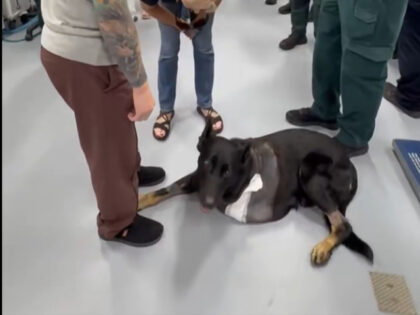
When a Polk County Sheriff’s K9 named Ace limped out of the veterinary hospital on three legs, the image crystallized a truth the 2A community has long understood: the same tools that protect law-abiding citizens can also be turned against those who serve them. Ace’s front-left amputation is the direct result of a suspect’s decision to fire on officers executing a lawful warrant—an act that underscores why the right to keep and bear arms must remain paired with the duty to use them responsibly. The dog’s survival is a testament to modern trauma care, but his missing limb is a permanent reminder that criminals armed with stolen or illegally obtained firearms do not discriminate between human deputies and their four-legged partners.
For Second Amendment advocates, Ace’s story is more than a tragic anecdote; it is data. Every year, law-enforcement K9s are shot in the line of duty, and the overwhelming majority of those shootings involve individuals already prohibited from possessing firearms. The incident reinforces the argument that enforcement gaps—not the mere existence of guns—drive violence against police. It also highlights why “red-flag” proposals and magazine bans miss the mark: the shooter in Polk County was not a law-abiding owner who suddenly “snapped,” but a fugitive willing to add attempted murder of a police dog to his list of felonies. True reform lies in prosecuting prohibited persons who possess guns, not in disarming the very citizens who overwhelmingly support the men and women—and canines—who protect them.
Finally, Ace’s three-legged return to duty sends a powerful cultural message. Rather than retiring the dog, the department is signaling that courage and capability are not diminished by the loss of a limb—an ethos that resonates with countless disabled veterans and armed citizens who refuse to be defined by their injuries. In celebrating Ace, the 2A community can point to a living example of why the right to bear arms exists: to empower the good guys, human or otherwise, to confront evil and still come home, even if the path is three-legged and harder than before.


