

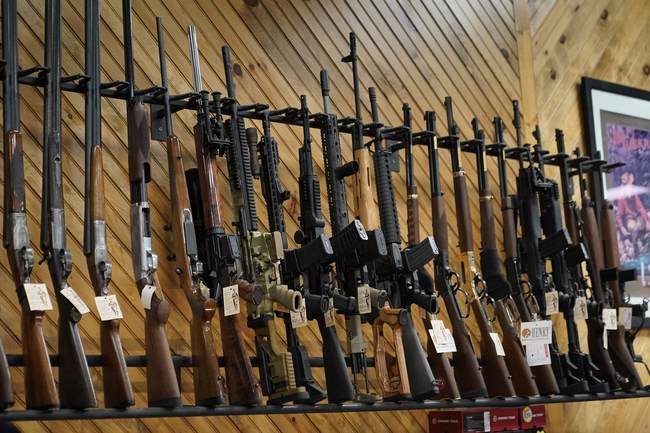
USAToday’s piece on the Bruen test and assault-weapon bans is a useful reminder that the Supreme Court’s 2022 decision didn’t just tweak the Second Amendment—it rewired the entire legal framework. Instead of letting judges weigh “public safety” against “gun rights,” Bruen demands that any modern restriction be justified by a historical analogue from the Founding era or Reconstruction. That single shift turns the usual policy debate on its head: the burden is now on the government to prove that 1791 or 1868 America already regulated the arms in question, not on gun owners to prove why they need them. For the 2A community, this is more than a procedural win; it’s a structural one that forces lower courts to stop inventing new balancing tests and start looking at actual history.
The practical fallout is already visible. Several federal judges have struck down or enjoined “assault-weapon” restrictions precisely because the government could not produce a Founding-era twin for banning semiautomatic rifles with detachable magazines. USAToday notes that the same logic is now being applied to magazine-capacity limits and “ghost gun” rules, creating a domino effect that could reach the Supreme Court within two or three terms. What the article underplays, however, is how this historical lens also protects the broader ecosystem of modern firearms technology: if the state must find a 1791 analogue for every feature it dislikes, then features like optics, adjustable stocks, or even polymer frames become constitutionally relevant rather than mere accessories.
For activists and litigators, the takeaway is clear—every new ban must be met with a demand for historical evidence, not policy arguments. That shifts resources away from public-relations campaigns and toward original-source research on 18th- and 19th-century militia statutes, surety laws, and Reconstruction-era disarmament measures. The Bruen test may be young, but it has already begun to re-anchor the Second Amendment in text, history, and tradition rather than in the policy preferences of whichever judge happens to hear the case.


