

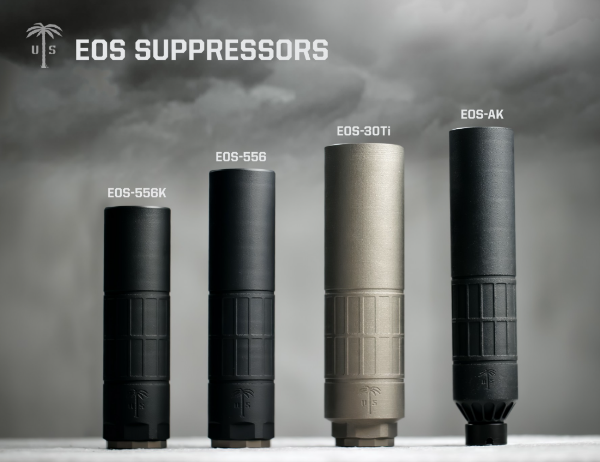
The federal court’s injunction in Silencer Shop Foundation v. ATF has done more than pause a single ATF rule; it has cracked open a regulatory logjam that has kept millions of law-abiding Americans from exercising a constitutionally protected right. By halting the agency’s attempt to reclassify certain suppressors as “short-barreled rifles,” the court has effectively restored the original statutory definition that Congress wrote in 1934—namely, that a suppressor is an accessory, not a firearm. US PALM and B&T USA’s EOS line is now the first product family positioned to capitalize on that restored clarity, offering customers a turnkey path that still runs through an FFL, a Form 4, and an NFA background check. In other words, the companies are not sidestepping the law; they are racing through the lane the courts just reopened.
What makes the moment historically significant is the speed with which private industry has translated a legal victory into tangible inventory. Within days of the injunction, US PALM and B&T USA announced that qualified buyers could place orders for EOS suppressors with the confidence that the products would ship once the remaining administrative steps are cleared. That agility matters because it signals to regulators—and to the next Congress—that the NFA marketplace is no longer a sleepy backwater; it is a dynamic sector capable of mobilizing capital and engineering talent the moment artificial barriers fall. For the broader 2A community, the lesson is equally clear: litigation is not merely a defensive tool to block bad rules; it can be an offensive catalyst that forces the executive branch to respect statutory text and due process.
Looking ahead, the EOS rollout will serve as a stress test for how far the injunction’s logic can travel. If the underlying reasoning—that the ATF exceeded its authority by treating accessories as firearms—survives appeal, expect parallel product categories to test the same boundaries. In the meantime, the companies’ decision to emphasize full compliance rather than regulatory arbitrage reassures fence-sitting legislators that the suppressor community is not asking for deregulation, only for rules that match the law Congress actually passed. That distinction may prove decisive when the next spending bill or oversight hearing revisits the National Firearms Act.


