

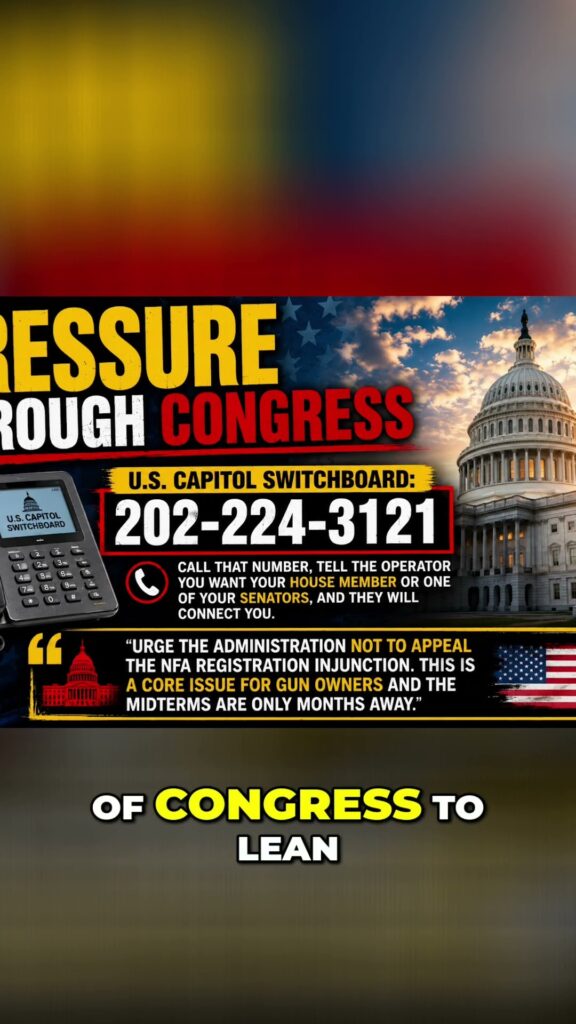
The sudden push to halt the NFA registration appeal is more than a procedural hiccup—it’s a calculated attempt to lock the administrative state’s preferred interpretation of the National Firearms Act into place before the courts can finish their work. By urging the ATF to “stop now,” the agency’s allies are betting that a rushed final rule will survive judicial scrutiny even if the underlying statutory authority is later found wanting. That gamble reveals how fragile the current regime really is: if the registration scheme were on solid constitutional footing, there would be no need to short-circuit the appeals process.
For the 2A community the stakes are straightforward. Every new NFA registrant adds another data point to a federal database that has already proven vulnerable to leaks and mission creep. Halting the appeal freezes that expansion in amber, giving Congress and the next administration a clearer target if they choose to revisit the 1934 Act’s presumptions about “dangerous and unusual” arms. More importantly, it keeps alive the possibility that suppressors, short-barreled rifles, and other Title II items could eventually be treated like any other arm—subject only to the shall-issue shall-not-infringe standard the Supreme Court has repeatedly endorsed since Heller.
The optics are equally telling. When regulators race to cement rules before judges finish reading the briefs, they telegraph weakness, not strength. Grass-roots pressure, amicus briefs, and state attorneys general who refuse to play along have already forced the agency into damage-control mode. That momentum matters: it shows that sustained legal and political engagement can still move the Overton window on items once considered permanently off-limits. The message to lawmakers is equally clear—don’t assume the NFA’s 90-year-old architecture is immune to constitutional renovation just because it has aged well in the Federal Register.


