

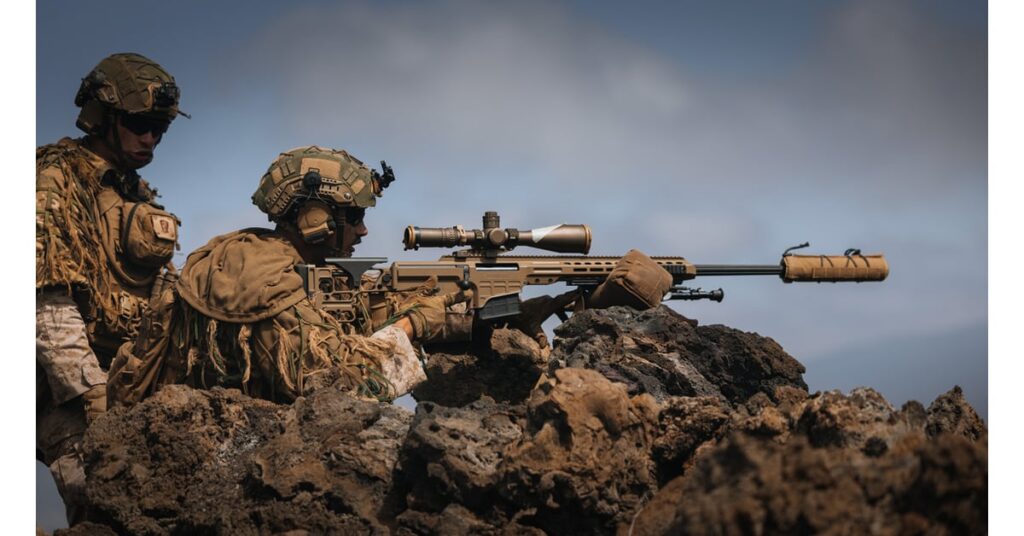
When the U.S. Marine Corps sniper team took top honors at the 2026 International Sniper Competition with the Barrett MRAD MK 22, they weren’t just proving marksmanship—they were showcasing what happens when American innovation meets battlefield-proven reliability. The MRAD platform’s modular design, quick-change barrels, and sub-MOA accuracy under punishing conditions gave the Devil Dogs a decisive edge over international competitors still tethered to legacy systems. In an era when some politicians push to restrict access to precision rifles based on cosmetic features or magazine capacity, this victory quietly underscores a core truth: the same technology civilians can lawfully own is the same technology that keeps our warfighters dominant on the global stage.
For the 2A community, the win carries a deeper message about rights and readiness. The MRAD MK 22 isn’t some exotic military-only unicorn; Barrett’s commercial versions are available to qualified buyers, and the competition results validate why law-abiding citizens should retain access to these tools for long-range training, competition, and self-defense at extended distances. Every time a Marine team posts a new record with gear that mirrors what civilians can purchase, it undercuts the narrative that “military-grade” firearms are too dangerous for private hands. Instead, the data shows that responsible ownership paired with serious training produces world-class results—exactly the outcome the Founders envisioned when they protected the right to keep and bear arms.
Looking ahead, this victory also signals where the precision-rifle market is headed. As more departments and agencies evaluate the MRAD platform for adoption, civilian shooters benefit from economies of scale that drive down prices and spur further innovation in suppressors, optics, and ammunition. The takeaway is straightforward: when American companies like Barrett succeed on the world stage, the entire ecosystem—from weekend long-range enthusiasts to future service members—gains capability and resilience. Restrictive legislation that severs that link doesn’t enhance safety; it simply cedes technological leadership to nations less concerned with individual liberty.


