

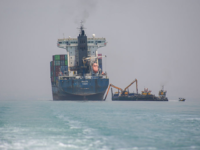
The U.N.’s abrupt suspension of all commercial traffic through the Strait of Hormuz after Iran’s missile strike on a Liberian-flagged tanker is more than a shipping crisis—it’s a live demonstration of why sovereign nations, and armed citizens within them, must never outsource their security to paper guarantees. Roughly one-fifth of global oil still squeezes through that 21-mile-wide chokepoint; when Tehran decides to close it, the world’s just-in-time economy stalls in hours. The same logic applies at home: an armed citizenry that can protect its own supply lines, ports, and energy infrastructure is far harder to coerce than one that waits for blue-helmeted resolutions or distant carrier groups.
For the 2A community the takeaway is immediate and practical. Every restriction on magazine capacity, semi-automatic rifles, or home-stocked ammunition is a bet that the next crisis will be handled politely by someone else—an assumption the Hormuz closure just shredded. Preppers and preparedness-minded shooters have long argued that redundancy beats reliance; now the evening news is illustrating the point with $120-a-barrel crude and empty diesel racks at truck stops. The right to keep and bear arms isn’t abstract theory when the next embargo could arrive via ballistic missile instead of legislation.
Longer term, expect renewed pressure on civilian arms manufacturers and importers as governments scramble to harden domestic energy nodes and ports. That scramble will be used, as it always is, to argue that “military-grade” hardware belongs only in state hands. The 2A response must be equally swift: document the failure of centralized security, highlight the speed with which armed merchant crews and citizen militias have historically filled the gap, and keep the legal and cultural infrastructure that lets free people defend their own lifelines when the next Strait of Hormuz moment arrives closer to home.


