

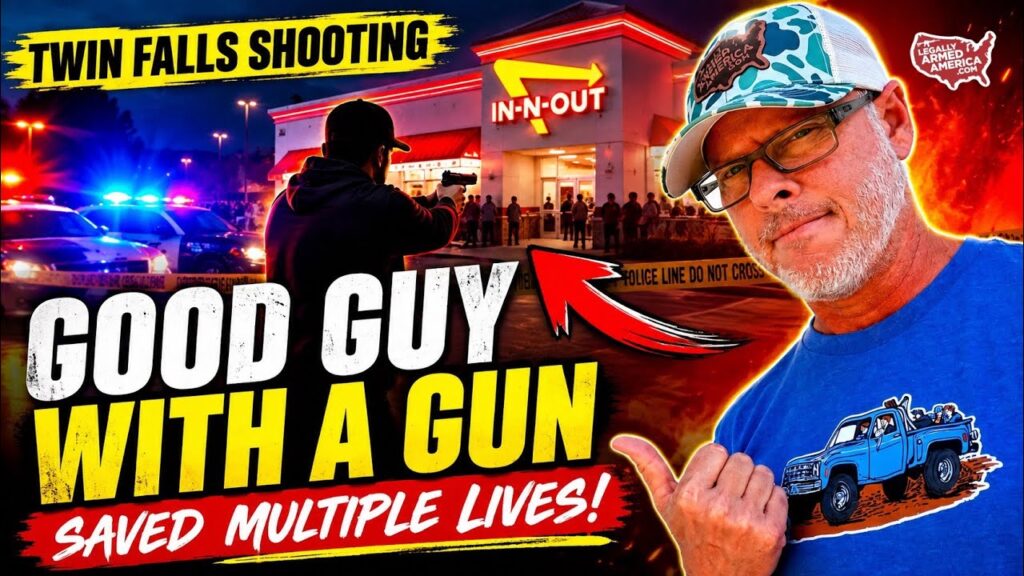
In the Twin Falls In-N-Out incident, an armed citizen’s split-second decision to engage the threat turned what could have been a massacre into a contained tragedy. While the suspect’s motives remain murky, the footage shows a clear pattern: the attacker opened fire inside a crowded restaurant, and within seconds a lawfully armed diner returned fire, forcing the shooter to retreat and ultimately ending the assault. This wasn’t a Hollywood standoff; it was a textbook demonstration of how a single prepared individual can disrupt an active killer’s timeline, buying precious moments for others to escape or take cover. The fact that the defender stopped shooting the moment the threat ceased further underscores the discipline that responsible gun owners bring to these chaotic scenes.
For the 2A community, Twin Falls is more than another “good guy with a gun” headline—it’s fresh evidence that shall-issue carry laws and constitutional carry states are producing measurable deterrence. Idaho’s permissive framework didn’t just allow this citizen to carry; it normalized the idea that ordinary people can be the last line of defense when seconds count and law enforcement is still minutes away. Critics who claim armed citizens only “make things worse” now have to explain why this shooter didn’t rack up a higher body count. Meanwhile, training organizations and instructors should treat the incident as a case study: draw decisions, shot placement under stress, and the legal aftermath all deserve scrutiny so the next defender is even better prepared.
The broader implication is cultural as much as tactical. Every time an armed citizen quietly prevents a larger tragedy, the narrative that gun owners are part of the problem loses ground. Twin Falls reminds us that rights exercised responsibly save lives, and that the fastest way to harden soft targets isn’t another bureaucratic checklist—it’s millions of citizens who refuse to be passive victims.


