

Background
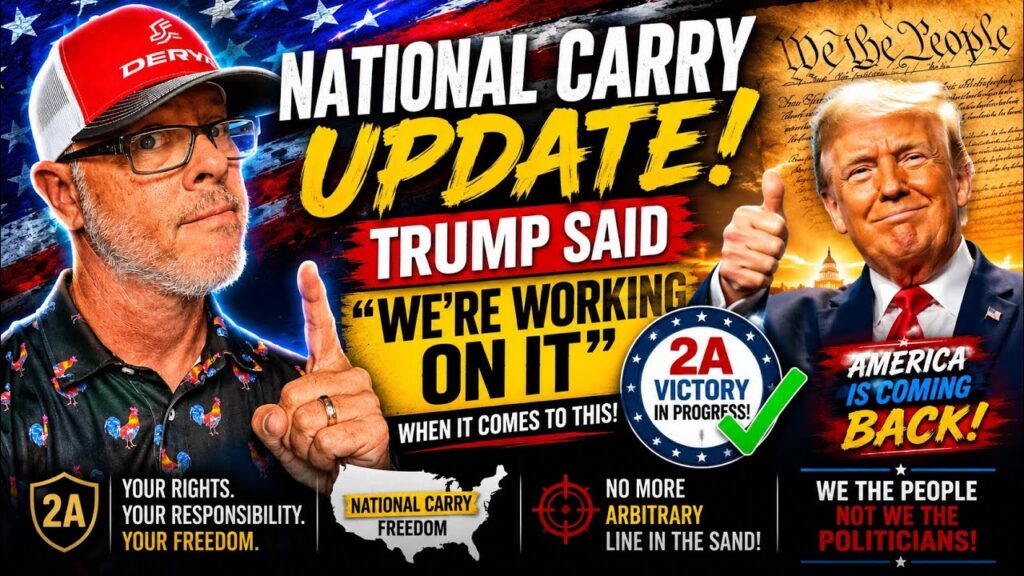
During a campaign-style stop at a Pennsylvania manufacturing plant, former President Donald Trump was asked about national right-to-carry legislation. He responded that his administration is “working on it,” prompting renewed discussion among gun-rights advocates about the prospects for uniform concealed-carry standards across state lines.
Legislative Landscape
Two bills currently sit before Congress. The Constitutional Concealed Carry Reciprocity Act (HR 38) would require states that allow carry to honor permits or permitless-carry status issued by other states. A companion measure, the National Constitutional Carry Act (S 4013), seeks to establish nationwide permitless carry by preempting most state-level restrictions. Legislative trackers give HR 38 roughly a 37 % chance of passage this session and place the more expansive Senate bill between 1 % and 3 %.
Pros, Cons, and Practical Outlook
- Pros: Both measures enjoy strong co-sponsorship in the House; the administration has already proposed 25–29 % cuts to agencies that regulate firearms and has redirected enforcement priorities toward violent crime rather than paperwork audits.
- Cons: The Senate’s 60-vote filibuster threshold remains a formidable barrier, and many lawmakers— even within the majority—are reluctant to override state jurisdiction so broadly. Midterm election cycles could further stall progress.
- Specs: HR 38 focuses on reciprocity only; S 4013 aims for true constitutional carry without permits.
The host cautioned against relying solely on federal action. “Never outsource your personal safety to federal politicians,” he said, urging individuals to “train consistently, understand the special legal landscape of wherever you travel,” and recognize that “the ultimate responsibility for protecting your family rests on your shoulders, not Washington’s.”


