

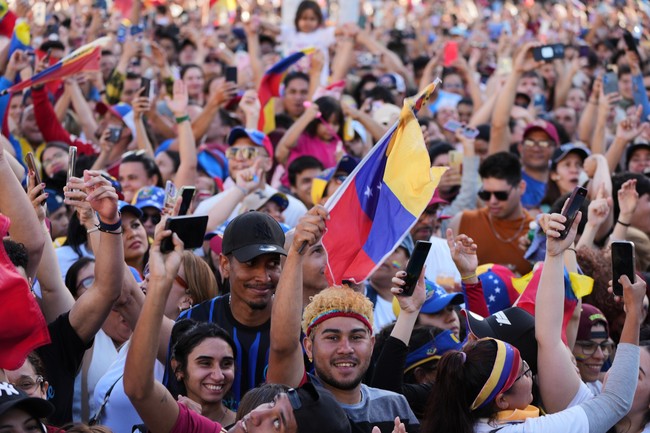
In a country where the state has long treated dissent as a capital offense, the release of 131 political prisoners under “alternative liberty measures” is less a humanitarian gesture than a calculated concession by a regime that fears losing its monopoly on force. Venezuela’s socialist experiment has always hinged on the disarmament of its citizens—both literally, through sweeping gun bans, and figuratively, through the criminalization of any organized opposition. When the government loosens its grip on political prisoners, it is usually because the cost of continued repression has begun to outweigh the benefits, whether measured in lost legitimacy abroad or mounting domestic unrest. For the 2A community, the lesson is unmistakable: once a government decides that only it may possess the means of violence, every other right becomes negotiable, and “liberty” is redefined as whatever the regime is willing to grant on any given day.
The timing of these releases is equally instructive. With hyperinflation still raging, basic services collapsing, and armed colectivos roaming the streets as de facto enforcers, Maduro’s inner circle appears to be testing whether a limited thaw can buy breathing room without ceding real power. Yet the underlying architecture of control remains intact: civilians are still barred from meaningful self-defense, while regime loyalists and criminal syndicates operate with near-impunity. This asymmetry is not an accident of policy but its central feature. History shows that authoritarian systems rarely liberalize firearms laws until they have already lost the capacity to enforce them; by then, the population has been rendered dependent on whatever scraps of freedom the state deigns to scatter. The Venezuelan episode therefore serves as a live demonstration of why the Second Amendment is not merely about sport or tradition, but about preserving the structural ability of citizens to resist incremental tyranny before it hardens into permanence.


