

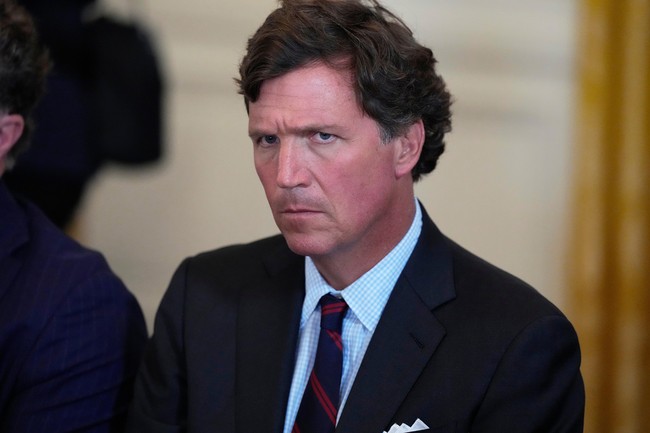
Tucker Carlson’s recent pivot from media firebrand to podcast provocateur has created an unexpected alignment with Hunter Biden’s own media rehabilitation tour, and the optics are as telling as they are ironic. Where Carlson once framed the Biden family scandals as emblematic of elite rot, he now appears willing to entertain the notion that Hunter’s laptop saga was less about corruption and more about cultural score-settling. That shift matters to the 2A community because it signals a broader softening among once-reliable voices who used to tie federal overreach—ATF pistol-brace rules, pistol stabilizing brace reclassifications, and the ghost-gun “frame or receiver” rule—to the same administrative state now being gently rebranded as misunderstood rather than malevolent.
The practical effect is a subtle reframing of the Overton window: if Carlson can float the idea that Hunter Biden’s troubles are largely personal rather than emblematic of institutional capture, then the urgency of rolling back Biden-era edicts on pistol grips, forced-reset triggers, and solvent-trap suppressors loses some of its political oxygen. Gun owners who once counted on Carlson to keep those regulatory aggressions front-and-center now face a media environment where the same outlets that once spotlighted ATF letters and DOJ guidance are instead chasing ratings-friendly reconciliation narratives. The result is a slow bleed of institutional skepticism that the 2A community can ill afford when the next pistol-brace injunction hearing or bump-stock litigation lands on the docket.
For Second Amendment advocates, the takeaway is straightforward: media personalities are transient, but the regulatory architecture they once opposed is not. Whether Tucker’s new posture is strategic re-positioning or genuine evolution, the ATF’s pistol-brace rule, the EPA’s lead ammunition proposals, and the DOJ’s continued pursuit of “zero tolerance” FFL revocations remain very much in force. The 2A community’s task is to treat every media cycle as noise and every filed comment, amicus brief, and state-level preemption statute as the signal that actually determines whether the right to keep and bear arms survives the next presidential term.


