

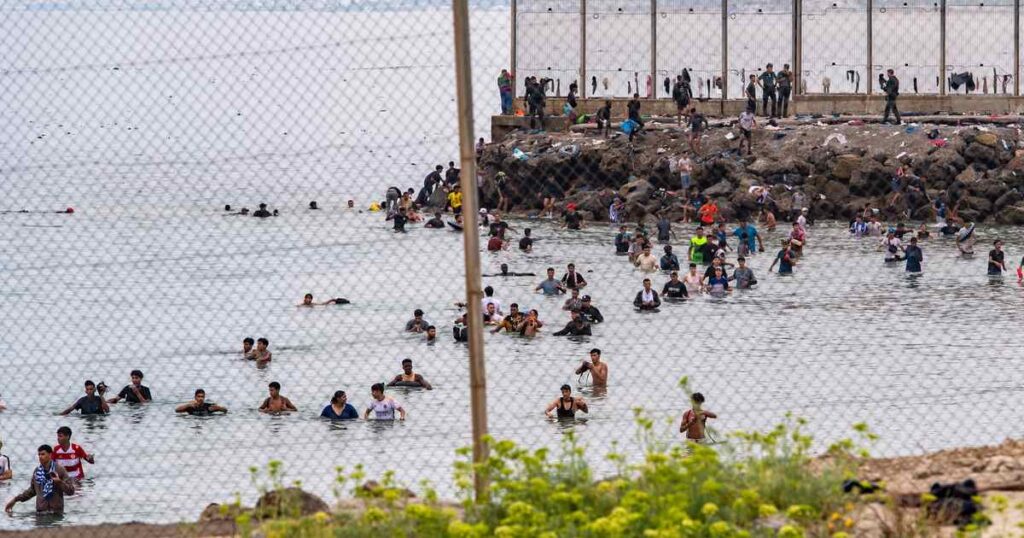
The sudden surge of 60,000 migrants into Spain’s North African enclave of Ceuta isn’t just a border story—it’s a textbook case of what happens when a nation loses control of its perimeter. Spanish authorities are now scrambling to contain the fallout: streets turned into open latrines, overwhelmed hospitals, and a local population that feels like strangers in their own city. The images of razor-wire fences sagging under the weight of bodies and the nightly clashes with police are stark reminders that geography alone doesn’t secure a border—resolve does.
For the 2A community, the lesson is immediate and practical. When governments can’t or won’t enforce the line, citizens are left to decide how much personal sovereignty they’re willing to trade for promises of safety. In Ceuta, that trade-off has already produced nightly patrols by civilian groups and a spike in legal firearm applications among residents who no longer trust the state to be there when seconds count. The same dynamic plays out on America’s southern border, where ranchers from Texas to Arizona have quietly upgraded from bolt-actions to modern sporting rifles—not because they crave confrontation, but because they’ve watched federal response times stretch from hours to days.
The deeper implication is cultural. A society that treats its borders as optional soon treats every other norm as optional too—property lines, due process, even the expectation that newcomers will assimilate rather than replicate the conditions they fled. The 2A exists precisely to keep that erosion from becoming permanent. When the state signals it can’t—or won’t—protect the perimeter, the right to keep and bear arms isn’t a hobby; it’s the last functioning layer of deterrence between order and the kind of chaos now visible on the streets of Ceuta.


