

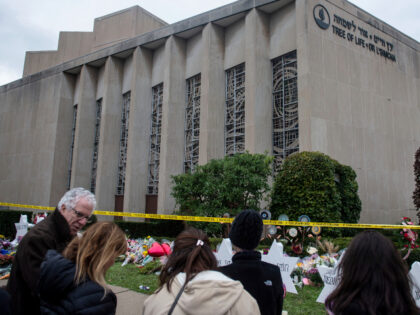
The Silver Spring Jewish Center’s lawsuit against Montgomery County’s house-of-worship carry ban is more than a local zoning dispute; it’s a direct test of whether government can disarm worshippers at the very moment they gather to exercise their First Amendment rights. Rabbi J. Menashe Shapiro and his congregation are arguing that the county’s policy effectively creates a “gun-free” zone that invites predators while simultaneously burdening the free exercise of religion—an argument that echoes the Supreme Court’s recent recognition, in cases like *Bruen*, that the Second Amendment protects the right to keep and bear arms in places traditionally open to the public. By framing the ban as both a religious-liberty and self-defense issue, the synagogue is forcing courts to confront the uncomfortable reality that “sensitive places” rhetoric has been stretched far beyond its historical moorings.
What makes this case especially potent for the 2A community is the demographic and cultural shift it represents. Jewish institutions have historically leaned toward gun-control orthodoxy, yet rising antisemitic violence—from Pittsburgh to Poway to recent campus unrest—has catalyzed a quiet but unmistakable re-evaluation. When a synagogue sues to restore the right of congregants to carry, it undercuts the narrative that support for shall-issue permitting is the exclusive province of rural conservatives. The litigation also spotlights the practical absurdity of county-level patchwork: a congregant who is legal to carry on the sidewalk may become a felon the moment they step across a threshold, even if that threshold is the only realistic refuge from an active threat.
If the synagogue prevails, the ripple effects could be immediate. Other faith communities watching crime statistics climb may follow suit, eroding the political viability of discretionary “sensitive-place” lists that treat houses of worship as uniformly off-limits. Conversely, a loss would embolden jurisdictions to expand such bans, betting that courts will continue to defer to legislative line-drawing rather than historical analogues. Either way, the case crystallizes a larger truth: the right to bear arms is most meaningful precisely where vulnerability and constitutional liberty intersect, and no community should have to choose between prayer and protection.


