

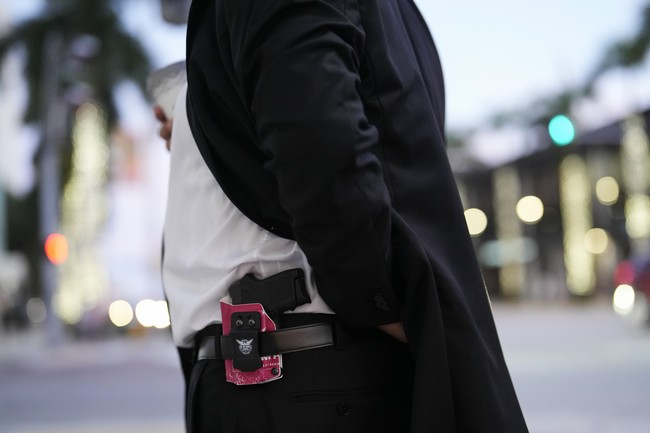
Hawaii’s long-standing resistance to the Second Amendment has always been framed as a matter of geography and culture, but recent events are forcing a hard look at whether that posture still makes sense. The state’s strict permitting regime and near-total ban on open carry have left residents—especially those on the more remote islands—effectively disarmed in the face of rising property crime and the logistical reality that police response times can stretch into hours. When a single high-profile defensive-gun-use case cuts through the usual media filter, it underscores a simple truth: the same ocean that isolates Hawaii from the mainland also isolates its citizens from rapid law-enforcement help, making the individual right to keep and bear arms not a theoretical abstraction but a practical necessity.
For the broader 2A community, Hawaii serves as a cautionary bellwether. Its permitting scheme, upheld for decades on the theory that “sensitive places” and “unusual” weapons justify near-prohibition, is now colliding with post-Bruen scrutiny that demands objective analogues from the Founding era rather than modern policy preferences. If the Ninth Circuit or the Supreme Court ultimately forces Hawaii to issue carry licenses on shall-issue terms, the precedent could cascade through similarly restrictive jurisdictions in California and New York. Conversely, if Hawaii digs in and litigates every inch, it risks painting itself as the last redoubt of interest-balancing that Bruen was meant to end—thereby accelerating the very national conversation the state has tried to avoid.
The deeper implication is cultural as much as legal. Hawaii’s narrative has long treated the Second Amendment as an imported threat to island harmony, yet the data on defensive gun uses nationwide suggest that lawfully armed citizens disrupt criminal opportunity without turning every dispute into a shoot-out. As more residents confront the gap between official promises of safety and the lived experience of isolation, the political cost of treating self-defense as a privilege rather than a right is rising. In that sense, the current reconsideration isn’t merely about one state’s gun laws; it’s about whether the Constitution’s enumerated protections can be permanently nullified by zip code.


