

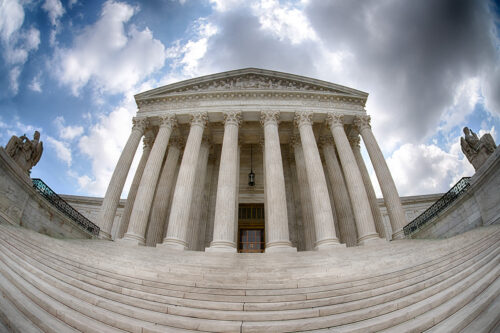
The Supreme Court’s latest refusal to pick a lane between 1791 and 1868 is less a dodge than a calculated pause that keeps the Bruen test alive and kicking. By letting the Ninth Circuit’s Wolford decision stand—where Hawaii’s “may-issue” carry regime was torched as a historical outlier—the justices signaled they still trust lower courts to apply the “how and why” framework without needing a new originalist scorecard. That’s good news for the 2A community: it means the post-Bruen wave of challenges isn’t stalled by an academic debate over ratification dates; instead, the focus stays on whether modern restrictions have any 18th- or 19th-century analogue that actually burdened the right the way today’s laws do.
What makes the non-decision strategically clever is how it preserves flexibility. If the Court had locked in 1791 as the sole measuring stick, anti-gun states would have flooded dockets with cherry-picked colonial-era restrictions; pinning everything to 1868 would have handed gun-control advocates the Reconstruction-era public-safety statutes they love to cite. By staying silent, the justices force both sides to argue from the full historical record, which overwhelmingly shows that law-abiding citizens could carry arms in public for self-defense. That evidentiary burden is already producing wins in cases involving magazine bans, assault-weapon restrictions, and sensitive-place rules—precisely the terrain where 1791 and 1868 both point toward broader protection rather than narrower.
For grassroots activists and litigators, the takeaway is clear: keep building the factual record. Every new historical discovery—whether it’s an 1820s surety statute that only applied to actual threats or an 1870s opinion affirming open carry—now carries extra weight because the Court has refused to narrow the window. The longer the justices let the lower courts wrestle with the full timeline, the more the data tilts toward the individual-rights understanding that millions of Americans already live by. In short, the “duck” isn’t retreat; it’s the Court letting history do the heavy lifting while the right to keep and bear arms keeps expanding on the ground.


