

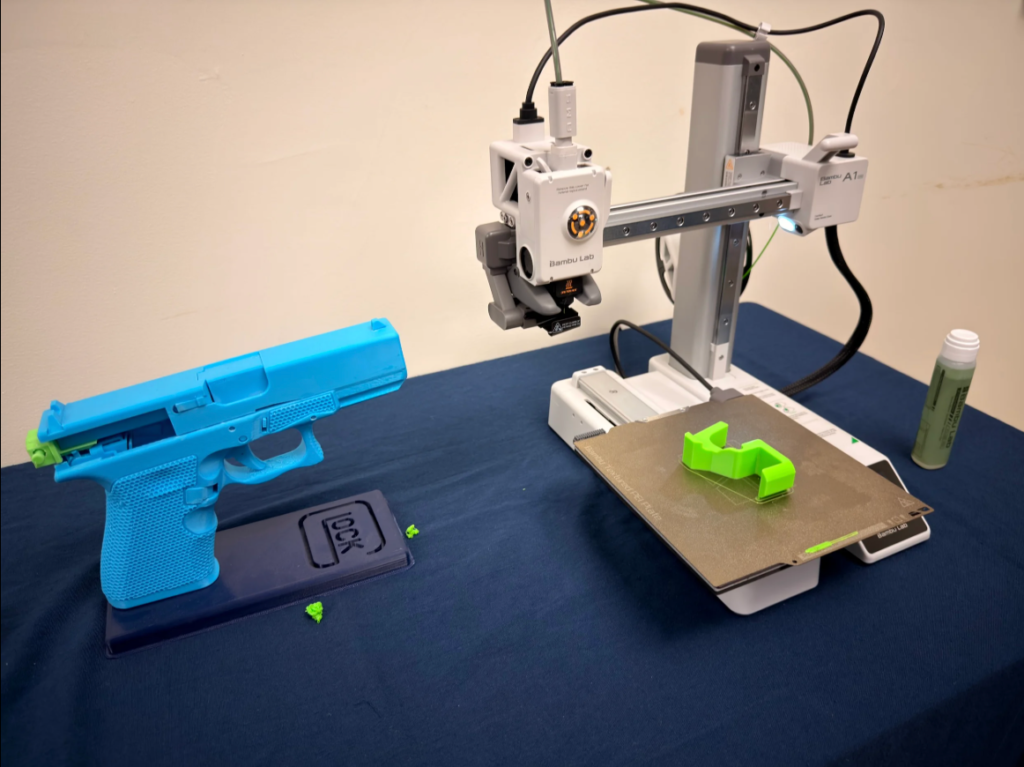
The latest push from New York to force 3D printers to refuse gun-related files is less about public safety and more about turning every manufacturer into an unpaid agent of the state. By demanding that printers come pre-loaded with software that can recognize and block firearm components, lawmakers are essentially asking the tech industry to build a digital moat around the Second Amendment. The Mumbai developer who claims to have already written such code is being celebrated in some circles as a hero of “responsible innovation,” but his work is really just the latest attempt to outsource gun control to silicon instead of passing it through legislatures where voters can see it.
What makes this effort especially dangerous is how it reframes a constitutional right as a mere software preference. Once printers are required to scan every file against a government-approved list of “prohibited geometries,” the same infrastructure can be updated overnight to block magazines, suppressors, or even replacement parts for legacy firearms. That turns an open manufacturing tool into a permanently licensed device whose capabilities are dictated by whoever controls the update server. The 2A community has already watched states treat background-check databases as de-facto gun registries; now the same logic is being applied to the machines themselves.
The deeper implication is that this is not really about stopping criminals—who will continue to use conventional guns or simply print on older, unmodified machines—but about raising the cost and complexity of lawful self-manufacture until it becomes the exclusive domain of federally licensed dealers. By embedding restrictions in the hardware layer, anti-gun legislators hope to achieve administratively what they have repeatedly failed to achieve legislatively: a practical end-run around Heller and Bruen. The response from gun owners should be the same one that has kept 80-percent receivers and open-source files alive so far—build parallel systems, maintain offline capability, and treat every new “safety” mandate as an invitation to route around it.


