

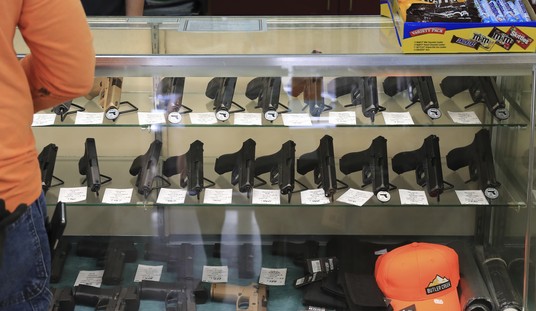
The lawsuit filed against several Southern California cities over their handgun rationing scheme represents yet another front in the ongoing legal war against incremental gun control, where local governments attempt to achieve through bureaucratic strangulation what they cannot accomplish through outright bans. These ordinances, which cap the number of handguns law-abiding residents can purchase within arbitrary timeframes, operate under the same flawed logic that treats the Second Amendment as a privilege subject to municipal rationing rather than a fundamental right. The plaintiffs rightly argue that such restrictions lack any historical analogue under the Bruen framework and serve no legitimate public safety purpose beyond creating artificial scarcity for those who follow the law while criminals remain unaffected.
What makes this case particularly significant is how it exposes the coordinated strategy among anti-gun jurisdictions to test the boundaries of post-Bruen jurisprudence through novel restrictions that masquerade as reasonable regulations. By framing handgun purchases as a commodity to be doled out like wartime rations, these cities reveal their underlying assumption that gun ownership itself is suspect rather than a protected constitutional activity. The implications extend far beyond California, as a favorable ruling could establish precedent that prevents other blue cities and states from implementing similar purchase limits disguised as public health measures, while a loss would embolden further experimentation with economic barriers to the exercise of constitutional rights.
For the broader 2A community, this litigation underscores the necessity of challenging not just outright prohibitions but the death-by-a-thousand-cuts approach that seeks to make legal gun ownership progressively more difficult and expensive. The fact that these cities felt emboldened to implement such schemes suggests they calculated that courts would defer to local authority on what constitutes acceptable burdens on the right to keep and bear arms. Each successful challenge like this one chips away at that assumption and reinforces that the Second Amendment is not a suggestion to be balanced against whatever policy preferences local officials happen to hold at any given moment.


