

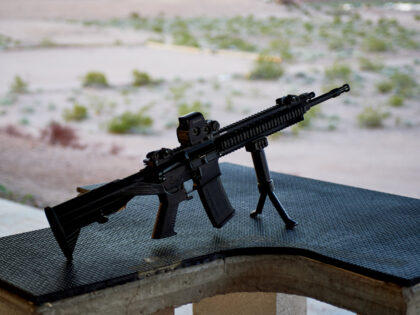
The Third Circuit’s decision to strike down New Jersey’s “assault weapons” ban is more than a single-state victory; it’s a structural blow to the post-*Bruen* narrative that “common use” can be redefined by legislative whim. By holding that the AR-15 is in “common use” for lawful purposes and therefore protected, the court handed the Supreme Court a ready-made factual record—complete with sales data, ownership estimates, and the absence of any historical analogue—to resolve the circuit split without having to wade into policy thickets. Slate’s complaint that this gives the Justices “cover” is an admission that the empirical ground has shifted: once a court treats the AR-15 like the 9 mm pistol in *Heller*, the burden flips to the state to produce a Founding-era tradition of banning weapons in common civilian hands, a burden no jurisdiction has yet met.
For the 2A community the ruling is both shield and blueprint. It demonstrates that *Bruen*’s history-and-tradition test is not merely theoretical; lower courts willing to apply it honestly are already producing uniform results across magazines, semiautomatic rifles, and large-capacity feeding devices. That consistency undercuts the “shalls-issue” narrative still pushed by some circuits and gives litigants in Illinois, California, and New York fresh precedent to press for injunctions before judges who might otherwise hide behind “sensitive places” or “public safety.” More importantly, the decision spotlights the soft underbelly of the gun-control litigation strategy: every new ban creates a fresh factual record of commonality, accelerating the very cycle the gun-control bar hoped to avoid.
Strategically, the opinion also telegraphs how the Supreme Court could craft a narrow but durable rule: if a semiautomatic firearm is lawfully owned by millions of Americans for self-defense, sport, or militia purposes, it is presumptively protected and the state must show an unbroken tradition of prohibiting that class of arms from the Founding to 1868. Such a holding would not only secure the AR-15 platform; it would short-circuit the next wave of “ghost gun,” “high-capacity magazine,” and “rapid-fire” restrictions already queued in state legislatures. In short, the Third Circuit didn’t just protect one rifle—it handed the Second Amendment bar a template that turns every new ban into Exhibit A for the next cert petition.


