

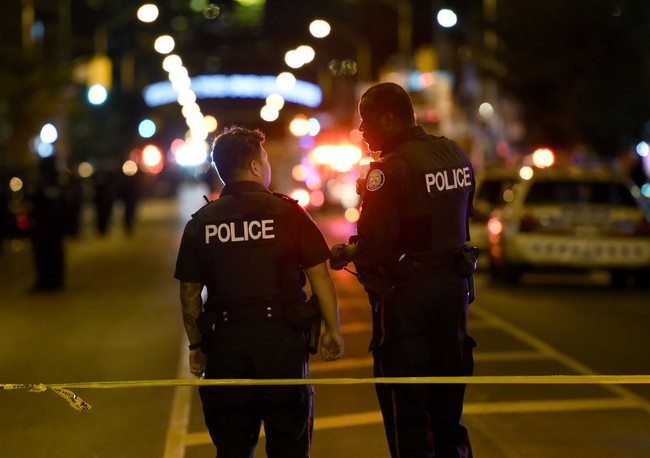
In a city that prides itself on some of the strictest gun laws in North America, a single shot fired at the U.S. Consulate in Toronto managed to do what decades of Canadian gun-control rhetoric could not: expose the uncomfortable truth that criminals don’t read statutes. The incident, which ended in a high-speed chase but no injuries, is already being spun by the usual suspects as an “isolated event,” yet it underscores a pattern the 2A community has long highlighted—when law-abiding citizens are disarmed by policy, the only people left holding the guns are those who never cared about the rules in the first place. Toronto’s handgun freeze and “assault weapon” ban didn’t stop this shooter; they simply guaranteed that the next law-abiding target would be equally defenseless until police arrived.
What makes the story especially telling for American gun owners is the speed with which officials pivoted from “our laws work” to “more laws are needed.” Within hours, Canadian politicians were floating fresh restrictions rather than asking why a prohibited person still obtained a firearm in one of the most regulated jurisdictions on the continent. The chase itself—conducted with Canadian police firearms, not civilian ones—further illustrates that when seconds count, only those already trusted with guns can respond. For the 2A community, the takeaway is clear: every new layer of restriction layered onto the law-abiding merely widens the gap between the armed criminal and the disarmed citizen, a gap that no amount of signage or statute can close.
The broader implication is that gun control’s marketing pitch—safety through surrender—fails the moment it meets reality. Toronto’s consulate shooting is a microcosm of the same dynamic playing out in American cities that doubled down on policing the permit rather than the predator. Until policy makers acknowledge that criminals operate outside the regulatory regime by definition, each new incident will be met with the same reflexive call for more rules that only the rule-followers will obey. The shot fired in Toronto didn’t just miss the consulate; it landed squarely on the illusion that paper barriers can substitute for the individual right of self-defense.


