

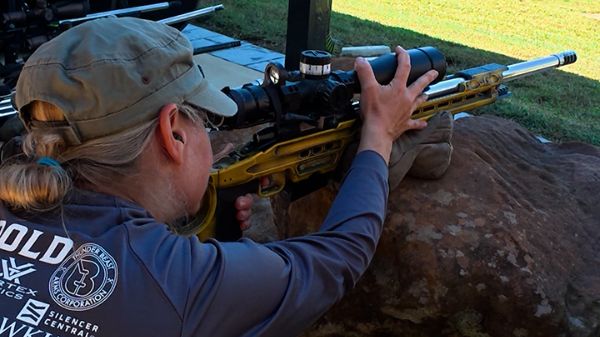
Shooting USA’s spotlight on GAP Grind 2025 isn’t just another match recap—it’s a masterclass in how precision rifle culture is quietly expanding the Second Amendment’s practical footprint. George Gardner’s decision to build the largest PRS-style event of the season around welcoming newcomers flips the usual script: instead of gatekeeping, the match lowers barriers with approachable stages, loaner rifles, and coaching lanes that turn spectators into shooters. That matters because every new competitor who learns to read wind, manage recoil, and hit steel at distance becomes another voice who understands why a semi-auto AR-10 or bolt-action .308 isn’t a “sniper rifle” in the media’s cartoon sense—it’s a tool for disciplined marksmanship that millions already exercise lawfully.
The deeper implication is demographic and political. Precision rifle sports pull in engineers, veterans, competitive shooters, and even hunters who never saw themselves as “gun people” until they tried a 1,000-yard stage. When those participants post their targets on social media or bring friends to the next local match, they normalize long-range accuracy as a mainstream skill rather than an outlier hobby. That normalization undercuts the narrative that only “military-grade” rifles belong in civilian hands; it demonstrates daily that average Americans can and do master the same fundamentals once reserved for special operations. In an era when statehouses debate magazine limits and feature bans, every new GAP Grind graduate is living proof that marksmanship training scales far beyond the range and into the culture war over lawful self-defense and sporting use.
Finally, the event’s timing—right as election cycles heat up—turns a shooting match into soft-power advocacy. Sponsors, media coverage, and the inevitable highlight reels on Shooting USA all reinforce that precision rifle competition is safe, family-friendly, and growing. That visibility matters when anti-2A voices try to paint all semi-automatic or high-magnification setups as inherently dangerous; the footage shows disciplined competitors, steel targets, and measured splits, not chaos. By curating the story this way, Shooting USA isn’t merely documenting a match—it’s documenting the slow, steady expansion of a constituency that votes, trains, and passes on both the hardware and the ethos of responsible armed citizenship.


