

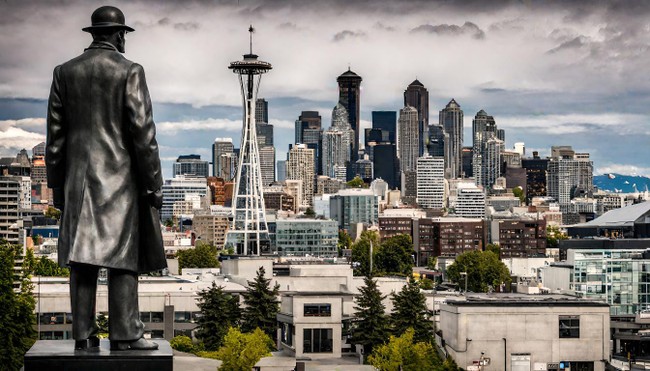
Seattle’s unraveling isn’t just another chapter in the endless saga of progressive governance gone wrong—it’s a cautionary tale for every law-abiding gun owner watching the same script play out in their own backyard. As businesses shutter and crime spikes, the city’s leadership has doubled down on policies that treat armed citizens as the problem rather than the solution. The result is a vacuum where criminals operate with near-impunity, knowing that the police are stretched thin and the courts are more interested in optics than accountability. For the 2A community, this isn’t abstract theory; it’s a live demonstration of why the right to bear arms isn’t a relic—it’s a lifeline when the social contract frays.
What makes Seattle’s collapse especially instructive is how quickly the city’s anti-gun orthodoxy has collided with hard reality. Measures that once sounded compassionate—defunding police, decriminalizing theft, restricting lawful carry—have produced the predictable outcome: law-abiding residents are left to fend for themselves while the political class retreats behind private security. The exodus of businesses isn’t just an economic footnote; it’s a vote of no confidence in a system that prioritizes ideology over public safety. Gun owners in Washington and beyond are taking note, recognizing that the same forces pushing for magazine bans and permit-to-purchase schemes are the ones presiding over this disorder.
The broader implication is clear: when government fails at its most basic duty—protecting life and property—the individual right to self-defense becomes not just a constitutional principle but a practical necessity. Seattle’s free fall is accelerating a national reckoning, one where voters are increasingly skeptical of leaders who disarm citizens while crime flourishes. For the 2A community, the lesson is to stay vigilant, stay armed, and never cede the narrative that lawful gun ownership is the last line of defense when the state steps back.


