

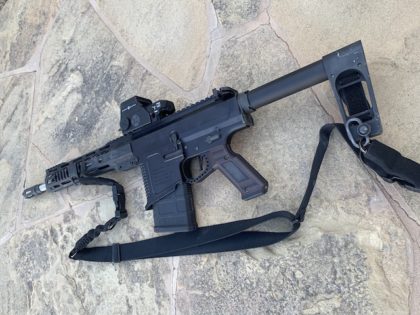
The Supreme Court’s decision to hear Grant v. Higgins is more than a routine docket entry; it’s the first time the justices will directly confront whether the AR-15 platform itself enjoys constitutional protection under both the Second and Fourteenth Amendments. By granting cert, the Court signals that lower-court rulings treating the rifle as an “arm” outside the Amendment’s scope are no longer the final word. For the 2A community, this is the closest we’ve come since Heller and Bruen to a nationwide rule that either cements or curtails the most popular rifle in America.
What makes the case especially potent is its dual-amendment framing. Petitioners are arguing that state bans violate not only the individual right to keep and bear arms but also the incorporation doctrine that makes the Second Amendment enforceable against the states through the Fourteenth. If the Court agrees, the ruling could short-circuit the patchwork of assault-weapon statutes that have proliferated since 2022 and force recalcitrant circuits to apply Bruen’s text-and-history test uniformly. Conversely, a narrow or adverse decision could green-light further state-level experimentation, turning the AR-15 into a perpetual constitutional shuttlecock.
For gun owners and industry stakeholders, the practical stakes are immediate: manufacturers face years of regulatory whiplash, retailers must plan inventory around shifting legality maps, and everyday citizens in ban states are left wondering whether their primary home-defense and competition rifle will remain legal. The Grant docket therefore isn’t just about one model number; it’s a stress test of whether the post-Bruen framework can deliver the predictable, nationally applicable protection the 2A community has long demanded.


