

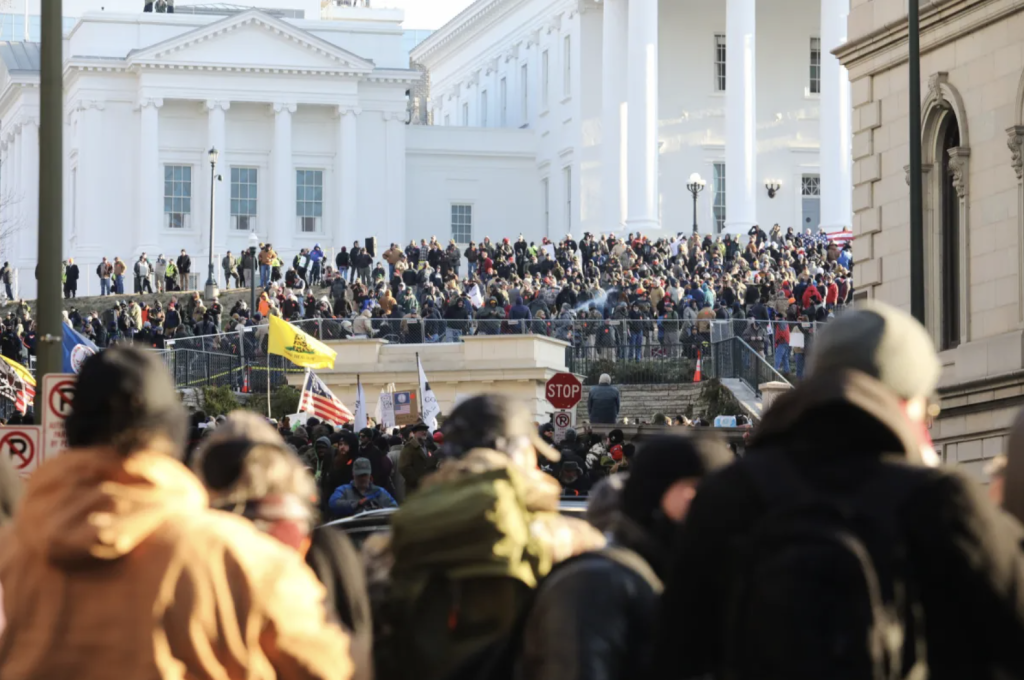
The Second Amendment Foundation, National Rifle Association, and Firearms Policy Coalition have joined forces in a federal lawsuit that takes direct aim at Virginia’s freshly minted restrictions on semiautomatic rifles and magazines. Rather than waiting for the new rules to settle into law, the coalition is striking early, arguing that the bans violate both the plain text of the Second Amendment and the Supreme Court’s Bruen framework that demands historical analogues for any modern gun control. By framing the restrictions as an outright prohibition on the most popular rifle platform in America, the plaintiffs are forcing the courts to confront whether a state can simply redefine “common use” out of existence whenever it dislikes the firearm in question.
What makes this suit especially noteworthy is the breadth of the coalition itself: SAF brings decades of litigation muscle, the NRA supplies institutional heft and grassroots reach, and FPC injects aggressive, youth-oriented energy that has already notched several rapid victories in other states. Together they signal that Virginia’s Democratic legislature has miscalculated the appetite for piecemeal disarmament; instead of incremental “assault-weapon” measures that once passed under the radar, the new law now faces a unified front determined to litigate every clause down to the last round count. The timing is also telling—filed before the ink is dry, the case positions the plaintiffs to seek an immediate injunction, potentially freezing enforcement and giving other states pause before copying Virginia’s playbook.
For the broader 2A community the implications stretch well beyond the Old Dominion’s borders. A favorable ruling would reinforce that magazines and semiautomatic rifles enjoy presumptive constitutional protection, narrowing the window for future copycat bans and handing lower courts a ready-made template to strike down similar laws in California, New York, and Illinois. Conversely, a loss would embolden legislators elsewhere to test just how far they can push “sensitive-place” and “sensitive-feature” restrictions before hitting a Bruen wall. Either way, the lawsuit crystallizes a new phase of Second Amendment advocacy: coordinated, multi-group litigation that treats every state-level infringement as a national precedent in the making.


