

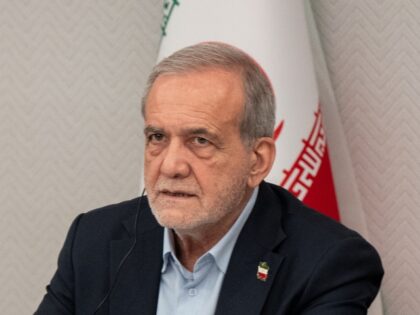
Iran’s president reportedly wants out because the IRGC has effectively seized day-to-day control of the regime, turning what was already a theocratic autocracy into something closer to a praetorian state run by its most ideologically extreme military faction. That matters to Americans who value the Second Amendment because the same IRGC that now appears to be sidelining even the regime’s civilian face is the entity that arms, trains, and directs proxy militias from Lebanon to Yemen—groups whose weapons pipelines ultimately trace back to the same global networks that supply drug cartels and street gangs on U.S. soil. When a radicalized military elite consolidates power inside a nuclear-threshold state, the downstream effect is more sophisticated small-arms and explosives proliferation, not less, which in turn fuels the very violence that anti-Second Amendment voices cite to justify disarming law-abiding citizens here at home.
The deeper irony is that Iran’s internal power shift exposes the futility of hoping that “diplomacy” or arms-control treaties alone can restrain determined adversaries. While Western governments debate new sanctions or another round of nuclear talks, the IRGC is demonstrating that real authority flows to whoever holds the guns and the will to use them—an object lesson that reinforces why an armed citizenry remains the ultimate check against both foreign and domestic tyranny. For the 2A community, the takeaway is straightforward: every new IRGC-backed terror cell or cartel corridor strengthens the empirical case that rights are secured by responsible, well-equipped citizens, not by paper promises from regimes that treat firearms as tools of state power rather than individual liberty.


