

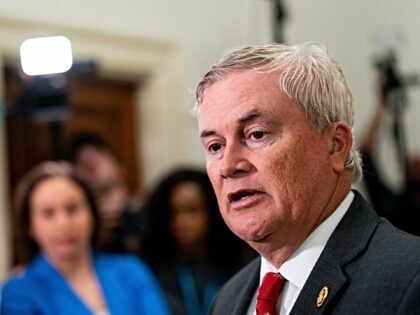
Rep. James Comer’s demand for documents from the ATF isn’t just another congressional fishing expedition—it’s a spotlight on how the Biden administration may have quietly outsourced gun-control policy to Mike Bloomberg’s Everytown for Gun Safety. The allegation is that career officials at the agency were coordinating with an outside advocacy group whose entire mission is to restrict lawful firearm ownership, effectively letting a billionaire-funded lobby shape rules that carry the weight of federal law. For the 2A community this raises the obvious question: when did the ATF stop being an enforcement agency and start acting as a policy shop for the gun-ban crowd?
The timing matters. Comer’s probe comes as the ATF has rolled out a series of controversial rules—on pistol braces, “ghost guns,” and dealer licensing—that have already been challenged in court for exceeding statutory authority. If internal emails show Everytown staffers previewing or even drafting those measures, it would confirm what many gun owners have long suspected: the regulatory state is being used as a workaround for legislation that Congress refuses to pass. That kind of collusion doesn’t just erode trust in the agency; it hands the 2A community a powerful litigation and political weapon at a moment when courts are increasingly skeptical of administrative overreach.
The larger implication is that Bloomberg’s money may be buying more than ads—it may be buying the machinery of government itself. If Comer’s investigation produces evidence of improper coordination, expect lawsuits arguing that the rules were tainted by outside influence and therefore invalid. More importantly, it gives pro-2A voters a concrete example of how federal agencies can be captured by single-issue donors, turning what should be neutral law enforcement into an extension of one side’s political agenda. That’s the kind of story that travels well beyond gun forums and into the broader debate over who actually runs the administrative state.


