

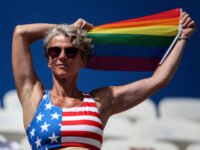
In a world where international sporting events are increasingly treated as ideological battlegrounds, the sudden appearance of “Pride Houses” ahead of the World Cup signals more than hospitality—it’s a calculated effort to carve out ideologically sanitized zones under the banner of safety. Organizers frame these spaces as necessary refuges, yet the underlying message is unmistakable: certain viewpoints, expressions, or even the presence of traditional symbols could be deemed threatening enough to warrant physical separation. For the 2A community, this development is a flashing warning light. When private groups begin designating “safe” enclaves based on identity rather than behavior, the next logical step in many jurisdictions has been to restrict who may carry tools of self-defense into those zones, effectively creating soft no-carry ghettos justified by progressive branding.
The deeper implication lies in the precedent being normalized: governments and NGOs collaborating with corporate sponsors to manage speech, association, and personal security through curated environments. If rainbow-branded housing can be declared off-limits to “hate” (a term whose definition expands yearly), then why not stadium perimeters, fan zones, or entire host cities? Law-abiding carriers who already navigate capricious state and local restrictions now face the prospect of private actors layering additional, ideologically driven prohibitions on top of them. The right to keep and bear arms exists precisely because individuals—not institutions—retain the ultimate responsibility for their own safety; outsourcing that duty to curated “Pride Houses” or their equivalents erodes the cultural expectation that self-defense is a universal human requirement, not a privilege granted only inside approved identity compounds.
Ultimately, the 2A community should read this development as part of a broader pattern in which safety rhetoric is weaponized to shrink the practical exercise of constitutional rights. Every new “safe space” declared by activists or event organizers invites fresh demands for gun-free policies, speech codes, and selective enforcement. Rather than waiting for these experiments to migrate from soccer tournaments into everyday civic life, gun owners and civil-rights advocates would do well to document the language, funding streams, and legal mechanisms being used—so that when the same logic arrives at town halls, school boards, or state capitols, the response is already prepared and the data is already compiled.


