

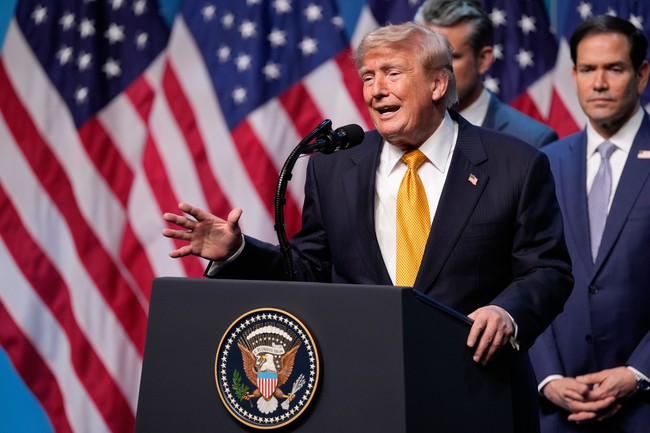
If you go open up a window for a minute (assuming you’re running the air conditioner, fellow American), you can already hear the collective shriek from the usual suspects who treat any pro-Second Amendment move as a personal affront. Trump’s latest maneuver—quietly green-lighting expanded export pathways for American-made firearms and components—has the left and their jihad-enabling allies frothing because it simultaneously strengthens domestic industry and undercuts the narrative that U.S. guns are the root of global evil. Instead of the tired “assault weapons ban” talking points, they’re now forced to confront the fact that lawful American manufacturers are exporting freedom, not just feeding some mythical “gun show loophole.” For the 2A community this is more than a policy win; it’s a reminder that economic leverage and constitutional principles can travel together when the right people hold the levers of power.
The deeper play here is strategic: by loosening bureaucratic choke points on exports, the administration is signaling that American gunmakers no longer have to beg permission from the same State Department crowd that spent years slow-walking licenses while China and Russia flooded gray markets. That shift matters for domestic capacity—more overseas sales mean more production volume, which keeps prices competitive at home and sustains the skilled workforce that turns raw steel into the tools that keep tyranny at bay. It also flips the script on the international gun-control crowd who love to cite U.S. exports as proof we’re “arming the world,” conveniently ignoring that our legal trade is transparent and end-user certified while their favored regimes move weapons through cutouts and proxies.
For those of us who treat the Second Amendment as non-negotiable, the real takeaway is that every regulatory barrier removed is another layer of insulation against future confiscation schemes. When American factories are humming for both domestic and allied foreign buyers, the political cost of any future gun-grab attempt rises dramatically—lawmakers suddenly have to explain why they want to shutter plants that employ thousands and supply NATO partners. Trump’s move may read like another culture-war jab to the coastal commentariat, but to the 2A faithful it’s a quiet reinforcement that rights exercised at scale become harder to revoke.


